
If you are searching for how to stop dog barking at the door, you have probably experienced the full concert: the doorbell rings, your dog launches toward the entryway, and your own stress level rises before the visitor even steps inside. This behavior is common, but it is not something you have to accept forever. The goal is not to force silence through intimidation. It is to teach your dog what to do instead.
Door barking can come from excitement, alarm, frustration, territorial feelings, or a learned habit. Sometimes it is a noisy combination of all five. Your dog hears a sound, predicts that something important is about to happen, and practices the same response again. Each repetition makes the routine feel more automatic. That is why yelling “quiet” from across the room often fails: your dog may hear another person joining the alarm system.
Start with the trigger, not the barking
Before training, watch what sets your dog off. Is it a delivery truck, footsteps in the hallway, a doorbell, someone turning the doorknob, or the sight of a guest through the window? Write down the earliest sign, such as ears lifting, a stiff body, a rush toward the door, or one sharp bark. That moment is where you want to begin.
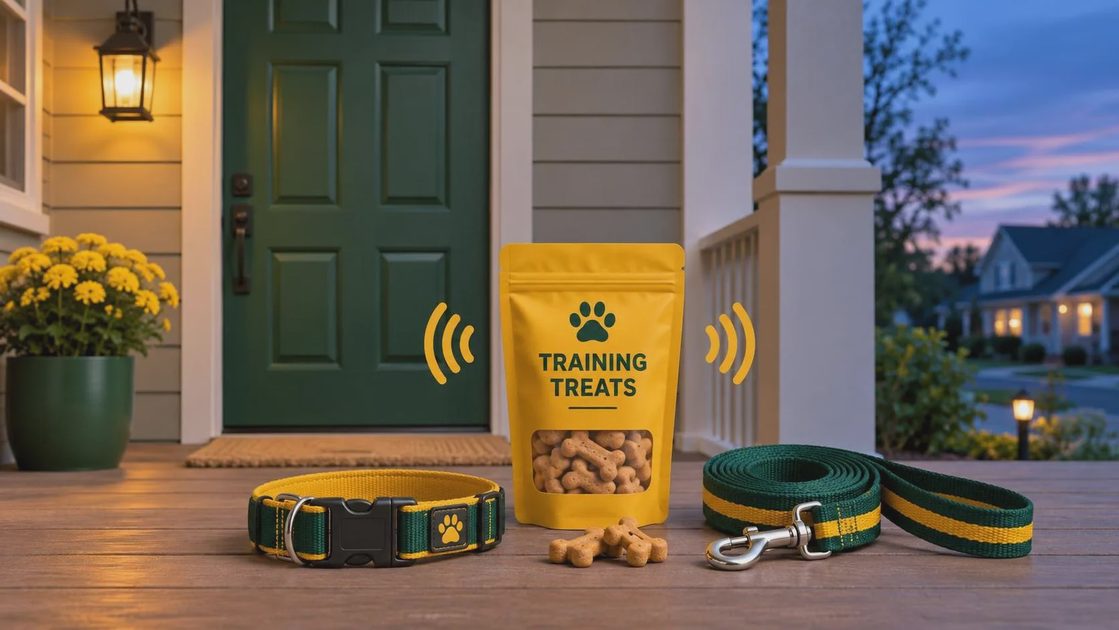
Management matters while you teach. Close the curtains if outside movement is the main trigger. Use a white-noise machine near the entryway. Move a dog bed several feet from the door, and keep a container of small treats within reach. A leash attached before expected visitors arrive can prevent frantic dashing, but do not use it to drag your dog toward the door or hold them in a frightening position.
When people ask how to stop dog barking at the door, I usually suggest starting with fewer real-life surprises. Ask a friend to text before approaching. Turn the doorbell volume down temporarily, or use a recording at very low volume. Training works best when your dog can still notice the sound and eat a treat. If your dog is already barking, lunging, or unable to take food, the setup is too difficult.

Teach a replacement behavior
A replacement behavior gives your dog a clear job. “Go to your mat” is useful because it creates distance from the doorway and gives you time to open the door safely. You can also teach a hand target, a sit-and-look-at-me routine, or moving behind a baby gate. Choose one behavior your household can repeat consistently.
Begin away from the door. Put a mat beside the sofa, toss a treat onto it, and say a calm word such as “mat” when your dog steps on. Feed two or three treats while all four paws remain there, then release your dog with “all done.” Repeat for short sessions of two to five minutes. You are building a pleasant pattern, not testing patience.
Next, add tiny pieces of the door routine. Touch the doorknob, then reward the mat. Take one step toward the door, then return and reward. Open it an inch, close it, and feed your dog if they remain under control. If barking starts, reduce the challenge. The lesson is that calm behavior makes good things happen, not that barking earns punishment.
Practice the doorbell in small steps
A real doorbell is often too powerful at first, so use a recording or have someone tap lightly. Play the sound at a low volume while your dog is several feet away. Immediately feed a treat, then pause. Repeat five times and stop. On another day, increase the volume slightly or move closer to the entryway. Do not rush through every level in one session.
For a practical how to stop dog barking at the door exercise, have a helper stand outside without knocking. Send your dog to the mat, reward, and let the helper leave. Then practice one soft knock. Later, add the door opening. The visitor should ignore your dog at first, avoid leaning over them, and wait until your dog is calmer before offering attention.
This approach can feel almost comically slow. That is normal. You are replacing a fast emotional reaction with a sequence your dog can understand. Ten calm repetitions over several days are more useful than one chaotic practice session with five failed greetings.
Make visitors part of the training plan
Tell regular visitors exactly what you need. They should text instead of repeatedly ringing, wait for an invitation to enter, and avoid excited greetings. If your dog has a history of jumping, nipping, or slipping through the door, use a secure gate, closed interior door, or leash handled by an adult. Safety comes before proving that your dog can greet freely.
You can give guests a small treat pouch, but ask them to toss treats toward the mat rather than luring your dog into their personal space. Tossing supports distance and reduces pressure. Once your dog can remain relaxed, a guest can turn sideways, speak softly, and offer contact only if the dog chooses to approach.
If your dog barks at the door because they want access to visitors, avoid opening the door during the loudest moment whenever possible. Wait for a brief pause, cue the mat, and then continue. At first, the pause may be only one second. That still counts. Over time, look for longer quiet intervals and softer body language.
Common mistakes that slow progress
One common mistake is repeating the cue louder and louder. If “mat” has stopped working, your dog is probably over threshold or the environment is too exciting. Guide the situation back to an easier step rather than turning the cue into background noise.
Another mistake is practicing only when an actual delivery arrives. Real arrivals are unpredictable, so add rehearsals when nobody needs to come inside. You can walk to the door, touch the handle, and return to the mat several times during an ordinary afternoon. Keep these sessions short enough that both of you still have patience.
Do not punish barking with shock, leash corrections, yelling, or frightening confrontations. Those methods can suppress sound without changing the underlying worry, and they can make visitors or the doorway feel more threatening. Reward-based training is not permissive; it is structured practice with consequences your dog can understand.
When to get extra help
Contact your veterinarian if the barking appeared suddenly, comes with unusual irritability, or is paired with pain, confusion, or major changes in sleep and appetite. A certified professional dog trainer or veterinary behaviorist can help if your dog growls, snaps, bites, panics, destroys barriers, or cannot eat around the trigger.
A professional can also help you answer the practical question of how to stop dog barking at the door when the issue is separation distress or intense fear rather than simple excitement. Look for reward-based methods and clear explanations. Skip anyone promising a guaranteed fix, dominance over your dog, or instant results.
For today, place a mat away from the door and practice sending your dog there five times without a visitor. Reward generously, release calmly, and write down what happened. Tomorrow, repeat it with one quiet knock. That was information, not failure, if your dog struggles. Train the dog in front of you, adjust the difficulty, and keep going. Progress has four paws and a messy middle.

Letters
No letters yet — be the first to write.