
If you have ever found your dog rolling happily in something unidentifiable, you probably wondered, how often should you bathe your dog? For most healthy dogs, a full bath every four to eight weeks is a reasonable starting point. That is not a rigid rule, though. Coat type, skin condition, activity level, weather, and the occasional emergency all matter more than a calendar reminder.
My beagle mix, Milo, can turn a peaceful Saturday walk into a mud-spattered event before I have finished my coffee. Pepper, my cattle-dog mix, usually needs less frequent bathing but benefits from regular brushing. The goal is not to make either dog smell like a scented candle. It is to keep the skin comfortable, remove dirt and allergens, and build a routine your dog can tolerate.
A practical bathing schedule for different dogs
A short-haired indoor dog that spends most days lounging, walking on sidewalks, and sleeping on clean bedding may need a bath every six to eight weeks. A dog with a thick double coat might go longer if brushing removes loose fur and debris. Dogs that swim, hike, dig, or spend time in wet grass often need cleaning more frequently.
Puppies are a little different. They may need an occasional bath after a potty accident or messy meal, but frequent full baths are not necessary. Use a warm room, lukewarm water, a secure non-slip surface, and a gentle puppy shampoo. Keep the first session short enough that the puppy finishes thinking, “That was strange but survivable,” rather than “I must escape this bathroom forever.”
Senior dogs, dogs with allergies, and dogs with oily or flaky skin need a more individualized plan. If your veterinarian has prescribed a medicated shampoo, follow the instructions about contact time and frequency. More washing is not automatically better, especially when irritated skin is involved.
A simple way to answer how often should you bathe your dog is to check the dog in front of you. If the coat smells strongly, feels greasy, looks visibly dirty, or has collected something sticky, a bath may be appropriate. If the skin is red, sore, unusually itchy, or covered with flakes, pause before reaching for shampoo and ask your veterinarian for guidance.

Signs your dog needs a bath sooner
Smell is useful information, but it is not the only clue. Run your hands through the coat and look at the skin underneath. Dirt may be hiding around the paws, belly, tail, collar area, or behind the ears. A dog that has been swimming in a lake, rolling in dead leaves, or playing at a muddy park may need a rinse even if the coat does not smell bad yet.
A bath is also sensible after contact with substances that could irritate the skin, such as road salt, lawn residue, or a greasy spill. Do not use household cleaners, dish soap as a regular substitute, essential oils, or human shampoo. These products can be too harsh, and some ingredients are unsafe if a dog licks them from the coat.
There is one important exception: chemical exposure or an unknown substance can be an emergency. Call your veterinarian or an animal poison-control service for instructions rather than guessing. The safest rinse method depends on what touched the dog, and scrubbing can sometimes spread a substance or damage the skin.
How to give a calmer, safer bath
Before bringing your dog into the tub, gather everything within reach: dog shampoo, several towels, a cup or handheld sprayer, treats, and a rubber mat. Put a towel on the floor before the bath so wet paws do not turn the hallway into an ice rink. Brush out tangles first because water can tighten mats.
Use lukewarm water and wet the body gradually, avoiding direct spray toward the face. Speak normally and offer small treats for standing still, looking at you, or allowing a paw to be handled. Apply shampoo from the neck down, massage gently, and rinse until the water runs clear. Shampoo left behind can cause itching.
For the face, use a damp washcloth instead of pouring water over the head. Keep water out of the ears and avoid the eyes. If your dog panics, stop and reset. You might finish by rinsing only the paws and belly, then practice entering the bathroom another day. That was information, not failure.
Drying deserves attention too. Blot rather than aggressively rubbing, especially with long or curly coats. A dog dryer can help if introduced slowly, but many dogs dislike the noise. Keep the dog warm until fully dry, and check dense areas such as the armpits for lingering moisture.
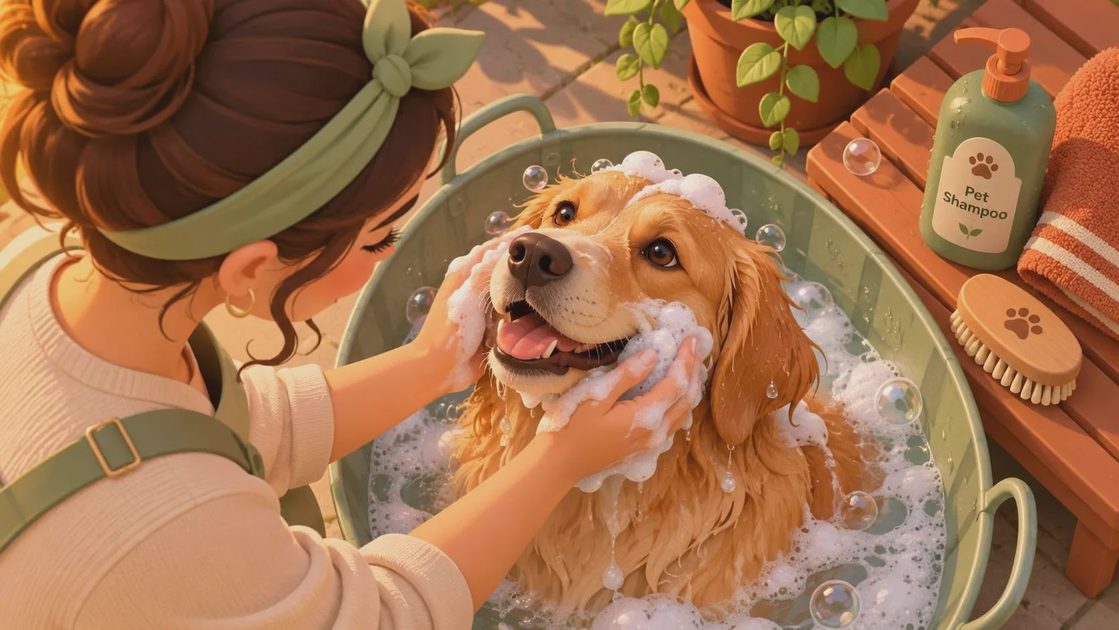
How often should you bathe your dog with allergies or skin problems?
Dogs with allergies, yeast infections, parasites, or other skin conditions may have a bathing schedule that differs from ordinary pet care. Some veterinary treatment plans call for weekly bathing, while other dogs need a longer break between washes. The correct frequency depends on the diagnosis and the product being used.
Watch for repeated scratching, chewing at the feet, hair loss, open sores, a strong unusual odor, ear problems, or skin that is becoming darker and thicker. A bath may temporarily remove allergens or odor without addressing the cause. If the problem keeps returning, schedule a veterinary examination instead of repeatedly changing shampoos.
When people ask how often should you bathe your dog because itching started after a bath, the answer is not automatically “less often.” The reaction could come from fragrance, incomplete rinsing, a new grooming product, or an underlying condition. Write down what product you used and when symptoms appeared; that information can help your veterinarian.
Bathing mistakes that make dogs miserable
The most common mistake is bathing on autopilot. A dog may tolerate a quick rinse but become distressed when water hits the face, nails scrape the tub, or the dryer turns on. Another mistake is waiting until the dog is filthy and then trying to perform a long, forceful grooming session. Smaller practice sessions usually create better cooperation.
Do not chase a dog around the house with the bottle already open. Start with treats near the bathroom, then reward stepping onto a towel, standing beside the tub, and hearing the water briefly. You can also ask a groomer to help with a severely matted coat, a fearful dog, or a dog who cannot be safely handled at home. Professional help is a practical tool, not a personal failure.
For many households, the best routine combines baths with brushing, paw wiping, clean bedding, and a quick weekly skin check. That reduces the pressure to use a full bath for every bit of outdoor dirt.
A simple routine to try this week
If you are still wondering how often should you bathe your dog, begin with a four-week check-in rather than a permanent rule. Once a week, inspect the coat, smell the skin, brush thoroughly, and wipe muddy paws. At the four-week mark, decide whether the dog actually needs a bath. Move the timing earlier after swimming, messy play, or a dirty accident.
Write the date of each bath in your phone along with the shampoo used and any skin changes. Over a few months, patterns become easier to see. You may discover that your dog needs a bath every five weeks, while your neighbor’s fluffy retriever needs one after every muddy hike.
The answer to how often should you bathe your dog is personal, but it does not need to be complicated. Keep the products gentle, rinse thoroughly, reward cooperation, and involve your veterinarian when skin problems persist. Train the dog in front of you, care for the coat in front of you, and remember that progress has four paws and a messy middle.



Letters
No letters yet — be the first to write.