
A covering puppy crate can make a busy room feel quieter and help a young dog settle, but it is not a magic curtain that fixes every crate problem. The right setup gives your puppy a shaded retreat while preserving airflow, visibility, and a comfortable temperature. The wrong setup can trap heat, encourage chewing, or make a worried puppy feel more isolated. I learned this the hard way with Pepper, who once pulled a lightweight sheet through the bars one determined inch at a time.
The goal is not to hide your puppy away. It is to create a predictable resting place where good things happen. Before buying anything, watch how your dog responds to the crate. A puppy who sighs, lies down, and falls asleep may enjoy a little privacy. A puppy who pants, claws, bites fabric, or repeatedly tries to escape needs a slower training plan, not a thicker cover.
Why cover a puppy crate?
Dogs often rest more easily when visual stimulation is reduced. A crate beside the television, kitchen, or front window can expose a puppy to constant movement: people walking past, delivery trucks, children playing, and every squirrel-related emergency outside. A partial cover can block some of that activity without turning the crate into a dark box.
A covering puppy crate may also help establish a nap cue. When the same breathable cover goes on before a quiet chew, the puppy starts to recognize a sequence: cover, treat, settle, sleep. This works best when the dog is already comfortable entering the crate. The fabric should support relaxation, not be used to force a puppy into confinement.
Start with one side or the back panel rather than covering every surface. Leave the front open if your puppy wants to watch you. Some dogs settle faster when they can see the room; others become more alert every time someone moves. Train the dog in front of you, not the imaginary puppy in a perfect online video.
Choosing safe crate-covering material
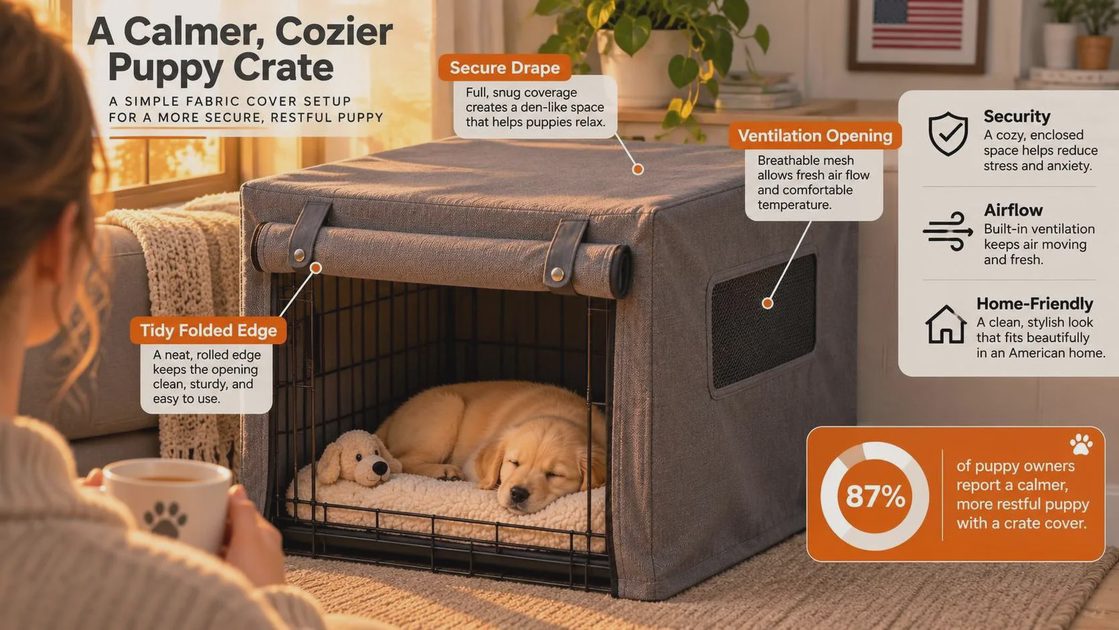
For most homes, a lightweight cotton sheet, breathable blanket, or purpose-made crate cover is a sensible starting point. Look for fabric that allows air to move and can be washed frequently. Puppies produce impressive amounts of dirt, drool, and mystery crumbs, so a cover that fits in the washing machine is more useful than one that looks beautiful in a product photo.
Avoid thick comforters, plastic-backed materials, towels with loose loops, and anything with dangling ties within reach of the dog. A determined puppy can chew fabric, pull it through the bars, and swallow pieces. That creates a choking or intestinal obstruction risk. If your dog grabs the cover, remove it and try a cover secured outside the crate or a shorter setup that leaves the front uncovered.
Check the temperature every time you change the arrangement. A covering puppy crate should never sit in direct afternoon sun, beside a radiator, or directly over a heating vent. Feel the air inside with your hand and watch your dog’s behavior. Heavy panting, drooling, restlessness, bright red gums, or weakness are reasons to uncover the crate and move the dog to a cooler area. Severe overheating needs prompt veterinary attention.
A cover should not block the ventilation openings on a plastic crate or press tightly against all sides of a wire crate. Leave a clear air gap and make sure the fabric cannot fall across the doorway. If your puppy is young enough to chew the edge, supervise the first several sessions rather than assuming a product labeled for dogs is automatically safe for your individual dog.
How to introduce the setup
Do not wait until you are late for work to test a covering puppy crate. During a calm part of the day, place the cover over one section and toss a few treats near the entrance. Let your puppy investigate. If the dog walks in, reward that choice. You can offer a stuffed food toy or a safe chew, then remove the cover before the puppy becomes frustrated.
Repeat this for short sessions. After several easy repetitions, close the crate door for a few seconds while you remain nearby. Open it while your puppy is still relaxed, then gradually add time. If whining escalates into frantic scratching, you moved too quickly. That was information, not failure. Reduce the duration, increase your distance more gradually, or pause the cover and practice the crate by itself.
A puppy does not need to sleep in a covered crate every time. Use the cover for naps, nighttime, or moments when the household is especially active. Keep some sessions uncovered so your dog can rest comfortably in different environments. Flexibility is valuable if you travel, visit family, or need to use a boarding facility.
Common mistakes that make crate time harder
One common mistake is covering the crate to silence barking. If barking reliably makes the room disappear, a puppy may become more frantic because the cover adds confusion. First check basic needs: bathroom timing, exercise appropriate for age, hunger, thirst, and whether the dog has been alone longer than it can manage. Then practice calm separation in tiny increments.
Another mistake is using a covering puppy crate immediately after an exciting event. A puppy who just chased a toy, greeted visitors, or wrestled with another dog may need a short decompression period. Offer water, lower the household noise, and guide the dog toward a chew before adding the cover. The crate should predict rest, not an abrupt end to all activity.
Do not use the crate as punishment. If the puppy is sent there after every accident or mischievous moment, the space can lose its value. Quietly clean up mistakes and return to supervision, frequent potty trips, and reward-based training. A crate is management equipment and a resting place, not a timeout room.
A simple routine for naps and nighttime
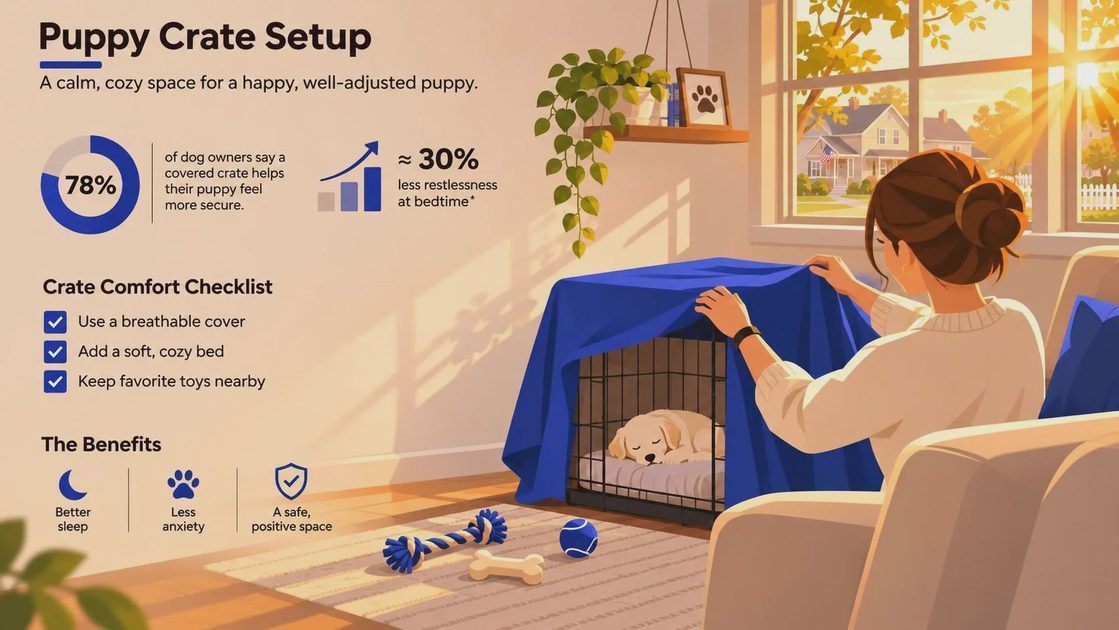
A realistic routine might look like this: take the puppy outside, allow a few minutes of calm sniffing, return indoors, offer a small chew, and guide the puppy into the crate. Cover the back and one side, keep the front clear, and sit nearby for a few minutes. When the puppy settles, continue your normal activity without making a dramatic exit.
At night, place the crate where you can hear the puppy and respond to genuine bathroom needs. Young puppies often cannot hold their bladder for an entire night, and covering the crate does not change that physical limit. Keep nighttime trips boring and brief. Carry or calmly walk the puppy outside, reward the bathroom success, and return to bed.
For a covering puppy crate used during the day, keep sessions short enough that your dog can succeed. A ten-minute nap followed by a calm release is more useful than an hour of escalating distress. Gradually build duration as the puppy matures and learns the household rhythm. There is no prize for rushing this process.
When a cover is not the answer
Some dogs become more anxious when visual access disappears. If your puppy pants, drools, slams into the door, or cannot take treats after the cover goes on, remove it. Practice relaxation with the crate uncovered and consider guidance from a certified professional trainer who uses reward-based methods. A veterinary conversation is also appropriate if the behavior is sudden, intense, or accompanied by panic.
A covering puppy crate can support a calm routine, but it cannot replace exercise, sleep, enrichment, potty training, or gradual alone-time practice. Think of it as one adjustable piece of the environment. Try a partial cover today, observe what your dog tells you, and change the plan based on that information. Progress has four paws and a messy middle.


Letters
No letters yet — be the first to write.