
Living with a scared dog can feel like solving a puzzle while someone keeps moving the pieces. Your dog may hide when guests arrive, freeze on walks, bark at ordinary sounds, or press against your legs during a thunderstorm. A scared dog is not being stubborn or dramatic. Fear is information about what feels unsafe, unfamiliar, or overwhelming. Your job is not to force bravery overnight. It is to make the next safe choice easier.
I learned this the hard way with Pepper, my cattle-dog mix. I once tried to encourage her toward a noisy recycling truck because I thought repeated exposure would prove that nothing bad was happening. She pulled harder, stopped taking treats, and spent the rest of the walk scanning every driveway. That was information, not failure. She was telling me the situation was too much, so I needed to create more distance and lower the difficulty.
What your scared dog may be communicating
Fear does not always look like trembling. A dog may crouch, tuck the tail, pin the ears back, lick the lips, yawn, turn away, or suddenly sniff the ground. Some dogs freeze so quietly that their owners miss the warning signs. Others bark, lunge, snap, or rush toward the thing that worries them. Those behaviors can create distance, which is often exactly what the dog wants.
Watch the whole body rather than focusing on one signal. A loose body, soft eyes, easy breathing, and willingness to eat suggest your dog has room to learn. A stiff posture, closed mouth, frantic scanning, or refusal of a favorite treat means the challenge is probably too intense. When a scared dog cannot eat, respond to their name, or look away from the trigger, training is not the priority. Safety and distance are.
Common triggers include unfamiliar people, children moving quickly, other dogs, cars, slippery floors, grooming equipment, doorbells, construction noise, and being alone. Pain, illness, poor vision, or hearing changes can also affect behavior. A sudden change deserves a veterinary appointment before you assume it is simply a training issue.

Help a scared dog feel safer today
Start by managing the environment. Close the blinds if sidewalk traffic causes barking. Use a quiet room during deliveries. Ask visitors to ignore your dog instead of reaching over their head. On walks, cross the street, turn behind a parked car, or step into a driveway before the trigger gets close. Management is not giving up. It prevents your dog from rehearsing panic while you build new skills.
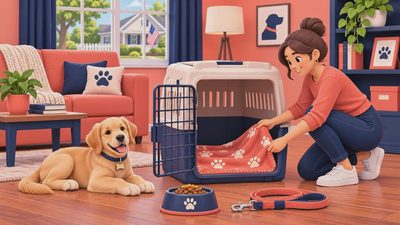
Create a retreat your dog can choose, such as a crate with the door open, a bed behind a baby gate, or a corner furnished with a blanket and water. Never drag a scared dog out of that space or send people in after them. If the retreat remains predictable, your dog may begin using it before fear reaches its highest point.
Pair manageable versions of a trigger with something valuable. If your dog notices a person 50 feet away and can still eat chicken, give several tiny pieces while the person passes. When the person disappears, the food stops. Over repeated sessions, the trigger can begin to predict good things. If your dog barks, lunges, freezes, or refuses food, increase distance immediately. The lesson should happen under the panic line, not in the middle of it.
Keep sessions short. Three minutes of calm observation can be more useful than 20 minutes of pushing through. Practice when you have an exit route and no appointment waiting at the end of the walk. Bring pea-sized treats, use a comfortable harness, and leave before your dog is exhausted.
What to avoid when fear shows up
Do not punish growling, barking, hiding, or snapping warnings. Punishment can suppress the signal without changing the underlying fear, leaving you with less information and a dog that still feels unsafe. Yelling, leash corrections, forced greetings, and “just let them get used to it” approaches can also make the trigger more frightening.
Avoid luring a scared dog toward a person or object with food if the dog has no ability to retreat. A treat can draw a dog closer than they are ready to be, and the dog may then feel trapped. Instead, reward looking at the trigger from a safe distance, turning back to you, or choosing to move away. Choice is part of confidence.
Visitors need a simple plan. Have them enter quietly, sit sideways, avoid eye contact, and toss treats behind the dog rather than reaching forward. Tossing behind encourages the dog to move away, eat, and return when ready. Tell visitors that ignoring the dog is active help, not rudeness. A dog who eventually approaches can decide whether contact happens.

A realistic confidence-building routine
Choose one trigger and write down the details: what happened, how far away it was, how your dog responded, and how long recovery took. This turns a vague problem into useful information. For example, “dogs are scary” is difficult to train around. “My dog can watch a calm dog across the street for five seconds, then needs to leave” gives you a starting point.
For the next week, practice one small exercise each day. Stand far enough from the trigger that your dog can eat. Mark the moment your dog notices it with a calm “yes,” then offer three treats. Walk away before your dog escalates. On another day, practice a cheerful U-turn in a quiet area using treats and a phrase such as “this way.” The goal is not obedience for its own sake. It is giving your dog a reliable escape strategy.
Track recovery as carefully as the reaction. A scared dog who settles in two minutes is in a different place from one who paces for an hour. After a difficult event, lower the demands for the rest of the day. Offer a sniffing walk, a food puzzle, or a nap instead of adding more exposure. Stress can stack, especially after vet visits, visitors, loud noises, or poor sleep.
Progress will be uneven. Your dog might greet a neighbor calmly on Tuesday and bark at the same type of person on Thursday. Weather, pain, fatigue, distance, and the person’s movement all change the picture. Train the dog in front of you, not the version you hoped would show up.
When professional help is the right next step
Contact your veterinarian when fear appears suddenly, intensifies quickly, or comes with changes in appetite, movement, sleep, bathroom habits, or touch sensitivity. A veterinary behaviorist can assess medical and emotional factors, and a qualified reward-based trainer can help you set safe distances and practice plans. Medication is not a failure when a dog is too distressed to learn; a veterinarian can explain whether it belongs in the broader plan.
Look for trainers who explain body language, use rewards, welcome questions, and avoid dominance-based promises. Be cautious of anyone guaranteeing a fast fix, recommending intimidation, or blaming you for every setback. Ask how they handle a scared dog who growls or refuses food. A thoughtful answer should include management, distance, choice, and safety.
You do not need a perfect house, endless free time, or a dog who loves every person and sound. Start with one quieter route, one retreat, and one tiny reward-based practice. If today’s goal is simply helping your dog notice a trigger and then feel safe enough to leave, that counts. Progress has four paws and a messy middle.


Letters
No letters yet — be the first to write.