
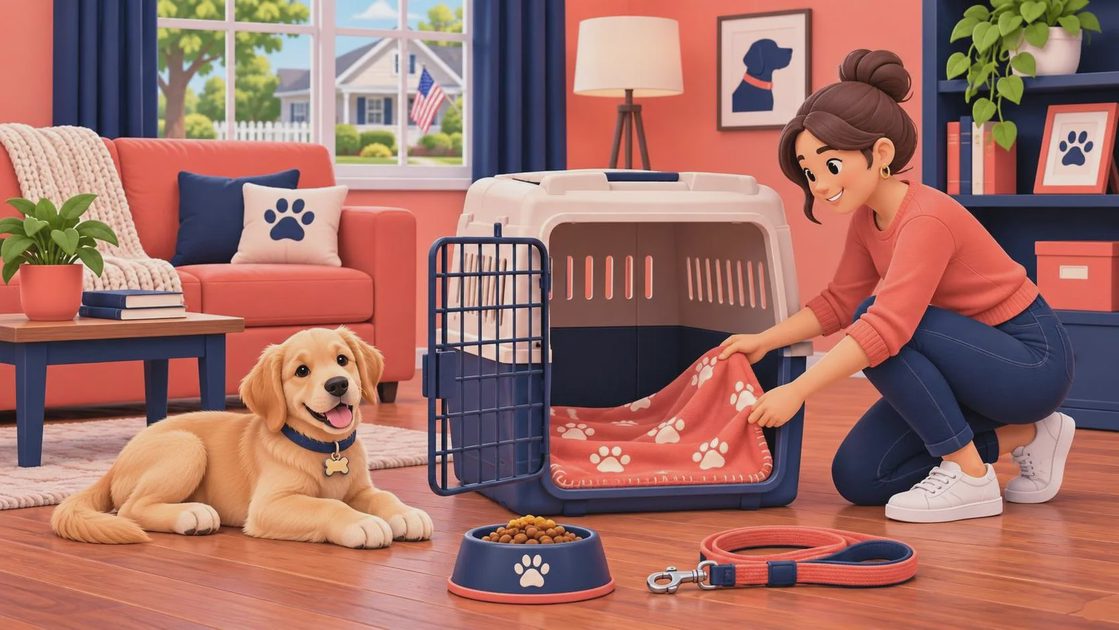
A puppy and crate can become a comfortable team, but the goal is not to close the door and hope for the best. Start with a properly sized crate, toss in a treat, and let your puppy explore with the door open. Build up to a few seconds behind a closed door, then gradually add time while your puppy stays relaxed. Some pups settle quickly; others need days or weeks of small, uneventful practice sessions.
A crate is a management tool, not a requirement for raising a good dog. If your puppy cannot relax in one yet, a puppy-proofed pen or small, safe room can give you breathing room while you work on it.
Set up a comfortable space
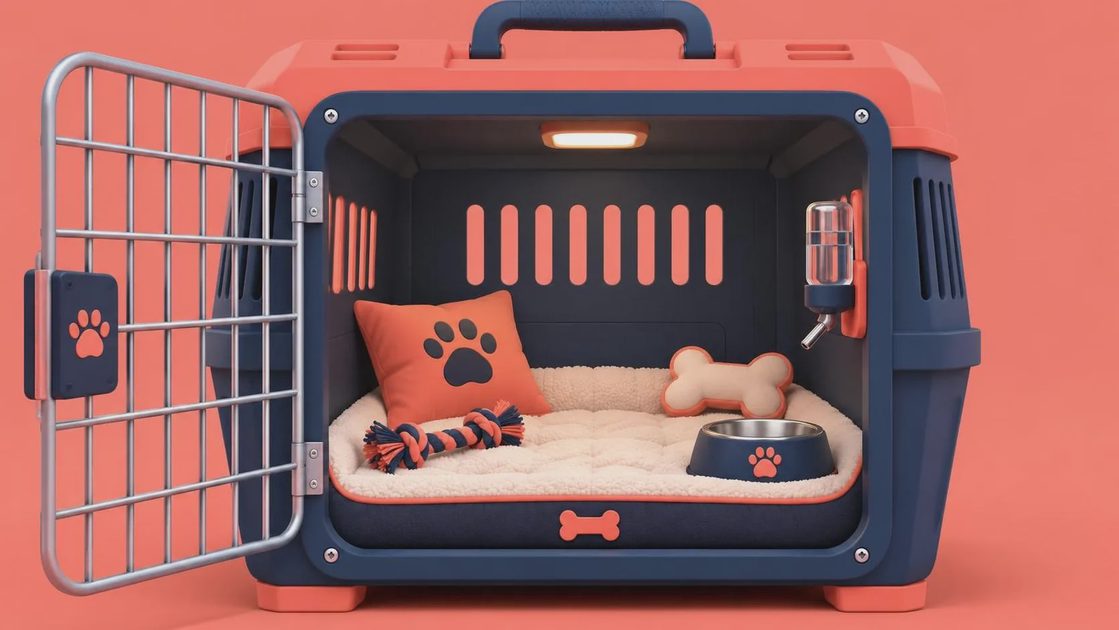
Choose a crate with enough room for your puppy to stand normally, turn around, and lie down comfortably. A divider can make a larger crate fit a growing puppy. Too much extra room may make it easier for a puppy to sleep at one end and potty at the other, though crate size alone will not teach house-training.
Place it somewhere your household spends time, away from direct sun, drafts, and noisy appliances. For nighttime, having it near your bed can make potty trips easier and help a new puppy feel less isolated. You can move it gradually later if you want it somewhere else.
A washable mat or towel is fine if your puppy leaves it alone. Skip loose bedding if they chew and swallow fabric. Remove collars and harnesses before crating to reduce snagging risks, and choose any food toy carefully: it should be appropriately sized and safe for your individual puppy. When in doubt, supervise rather than leaving an item inside.
Introduce your puppy and crate without a standoff
Begin when your puppy has had a potty break and is ready for a quiet moment. Leave the door open and drop a few treats just inside. Let your puppy step in, eat, and come back out. Repeat a handful of times, then stop while the game is still easy. There is no need to push them inside or hold the door shut.
Next, offer a meal near the entrance. If your puppy is comfortable, move the bowl a little farther inside over several meals. A puppy who stretches in but keeps their back feet planted may be telling you the setup is still a little too hard. Bring the bowl closer to the opening and give them room to choose.
Once your puppy walks in willingly, briefly swing the door toward closed, reward, and open it. Work up to latching it for a second or two while you sit nearby. Open the door before your puppy becomes worried. Over multiple sessions, add a few seconds, then try standing up or taking one step away. Change one thing at a time: duration and distance do not both need to get harder today.
A practical puppy and crate session might last just a minute or two. If your pup stiffens, stops eating, scratches at the door, or starts escalating into frantic barking, make the next repetition easier. That was information, not failure.
Plan potty breaks before you need them
Young puppies have small bladders and uneven control. Take yours out after waking, after meals, after play, and before settling into the crate. Offer another trip when they wake up. Quiet praise and a treat immediately after they finish outside can help make the connection clear.
There is no universal number of hours that every puppy can comfortably wait. Age, size, health, activity, and the individual puppy all matter. Start with frequent opportunities and watch your puppy's pattern rather than stretching the interval to match a rule you found online. Many young puppies need at least one overnight potty trip.
If an accident happens in the crate, clean it with an enzymatic cleaner designed for pet messes and adjust the schedule. Do not scold your puppy after the fact. Frequent accidents despite regular opportunities, straining, diarrhea, or a sudden change in bathroom habits are reasons to call your veterinarian.
What to do when your puppy cries
First, consider the obvious needs: a potty break, water, discomfort, or being too hot or cold. If it may be a bathroom request, calmly take your puppy outside on leash, give them a chance to go, and return without turning the trip into playtime. Do not withhold water as a shortcut to fewer accidents; ask your vet about your puppy's individual needs.
A little brief fussing is different from panic. If your puppy is escalating, drooling heavily, throwing their body against the crate, or trying frantically to escape, do not leave them to cry it out. Calmly let them out when it is safe, and make the next practice much shorter and easier. A pen or puppy-proofed area can be a useful temporary alternative.
For a puppy and crate struggling at bedtime, move the crate closer to you and practice relaxed daytime repetitions rather than saving all the learning for lights-out. You can sit beside the crate and speak softly; comforting a worried puppy does not spoil them. If distress continues or your puppy risks injury, contact your veterinarian and a qualified reward-based trainer or veterinary behaviorist.
Fit crate time into a normal day
Use the crate for short rests and situations when you cannot supervise, not as a place for punishment. Puppies also need time out for play, social exposure, training, companionship, and sleep. If your workday is longer than your puppy can comfortably manage, arrange a visit from a trusted person or use a safe pen setup with an appropriate potty area while training continues.
One puppy and crate routine is enough to begin: potty break, a few treats in the open crate, a brief closed-door repetition, and a calm release. Keep a note of what felt easy and what caused worry. Tomorrow, train the dog in front of you—not the imaginary puppy with a perfect schedule.


Letters
No letters yet — be the first to write.