
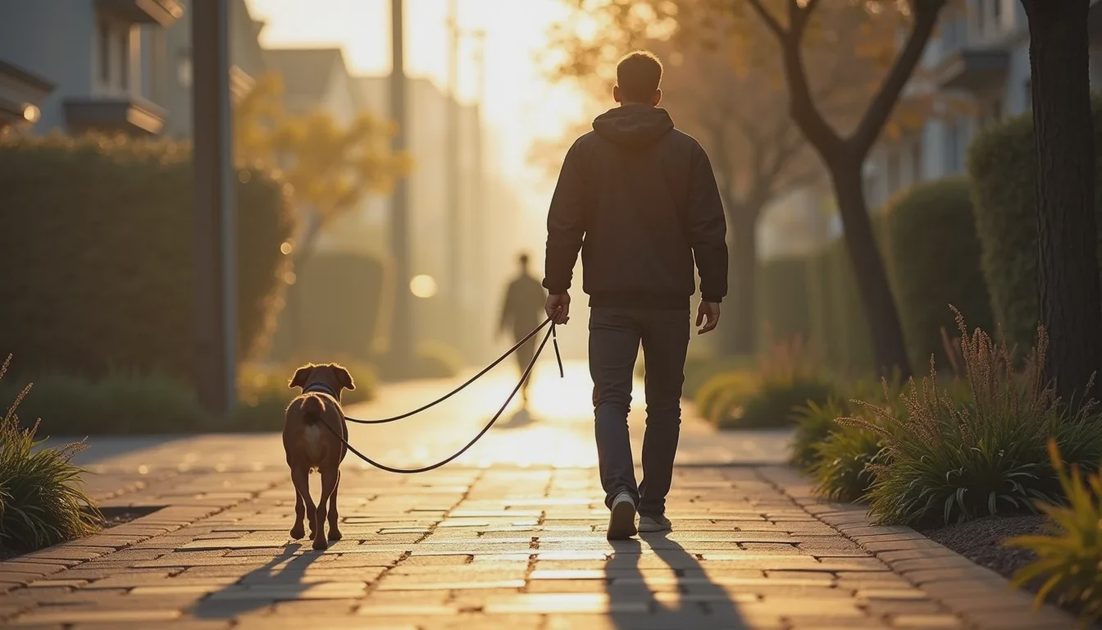
I used to practice walking skills at the most convenient time for me—usually late afternoon or early evening after work.
That is also when the neighborhood is busiest: people coming home, other dogs out for their walks, delivery trucks, kids on bikes. Pepper would start the session already scanning, and within a block we were both frustrated.
The problem was not her ability to learn. The problem was that I was asking her to practice a new skill at the hardest time of day.
Timing is one of the most underused training tools.
Why Time of Day Matters More Than Most People Think
Loose-leash walking, check-ins, and calm passing of distractions are all affected by the dog’s arousal level and the density of environmental triggers. A behavior the dog can offer in a quiet setting often falls apart when the neighborhood is at peak activity.
Practicing only at peak times means the dog rarely gets clean, successful repetitions. Instead they rehearse scanning, pulling, and reacting. The daily walk becomes a repeated practice of the exact patterns you are trying to change.
When you shift even some of the practice into quieter windows, the dog gets a chance to succeed. Those successes build the foundation that later makes harder times of day more manageable.
The Practical Advantage of Low-Distraction Windows
Most neighborhoods have quieter windows. Common ones include:
Early morning (before most people leave for work)
Mid-morning on weekdays
Early afternoon in some residential areas
Later evening after the main rush, depending on the area
These windows give you a higher chance of successful practice before you ask the dog to handle harder conditions. The dog is more likely to notice you, respond to known cues, and stay under threshold long enough to learn.
How I Structure Practice Now
I split walks into two categories:
Training walks
Short, deliberate sessions during quieter times. The goal is clean repetitions of loose-leash walking, check-ins, or passing mild distractions. I protect these sessions from becoming exhausting or overly long.
Management / exercise walks
Regular outings at whatever time is necessary for potty and movement. I use management tools and lower expectations. These walks are not the primary classroom.
This separation stopped me from feeling like every walk had to accomplish everything at once. Training walks became more productive. Management walks became less frustrating because I was no longer trying to force learning into them.
Finding Your Neighborhood’s Quiet Windows
You do not need a perfect schedule. A few observations help:
Notice when other dogs are most common on your usual routes.
Note traffic patterns and school or work rush times.
Test one early-morning or mid-morning loop and compare the dog’s body language to a typical evening walk.
Even two or three quieter practice sessions a week can change the overall pattern faster than daily practice during the hardest hours. The goal is not to eliminate busy-time walks. The goal is to create enough successful practice that the dog has a stronger foundation when the environment gets harder.
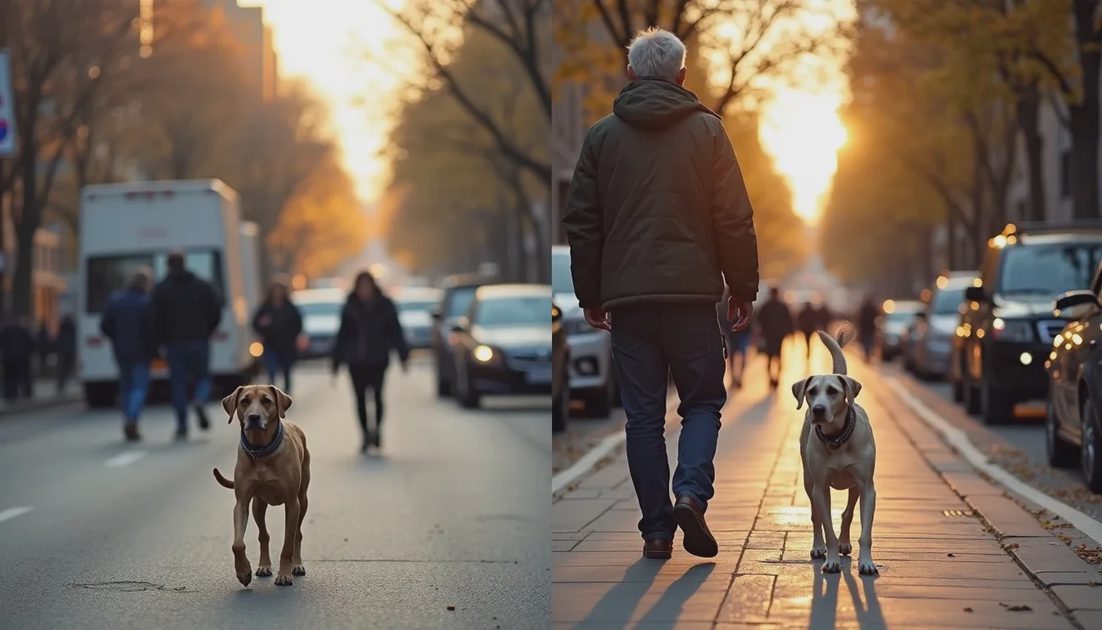
What to Do When Quiet Times Are Limited
Not everyone can walk at dawn. If your available times are mostly busy, adjust the other variables:
Choose the least busy micro-route (side streets instead of the main road)
Keep sessions very short
Raise reward value
Use distance from triggers aggressively
Accept that progress will rely more on management until you can create some easier repetitions
The principle stays the same: the dog needs successful practice at a difficulty level they can handle. If the time of day is fixed and difficult, then distance, duration, and reward value become the main tools for keeping the dog under threshold.
A Simple Experiment to Try This Week
Pick one quieter time slot and use it for a short, focused walking session. Keep the criteria low and the reward rate high. Then compare the dog’s responses to a typical busier walk.
Most people notice a difference in the dog’s ability to check in and stay under threshold within a few sessions. The quieter window does not magically solve every leash problem, but it gives the dog a fairer chance to practice the behavior you actually want.
How This Fits Into a Realistic Training Plan
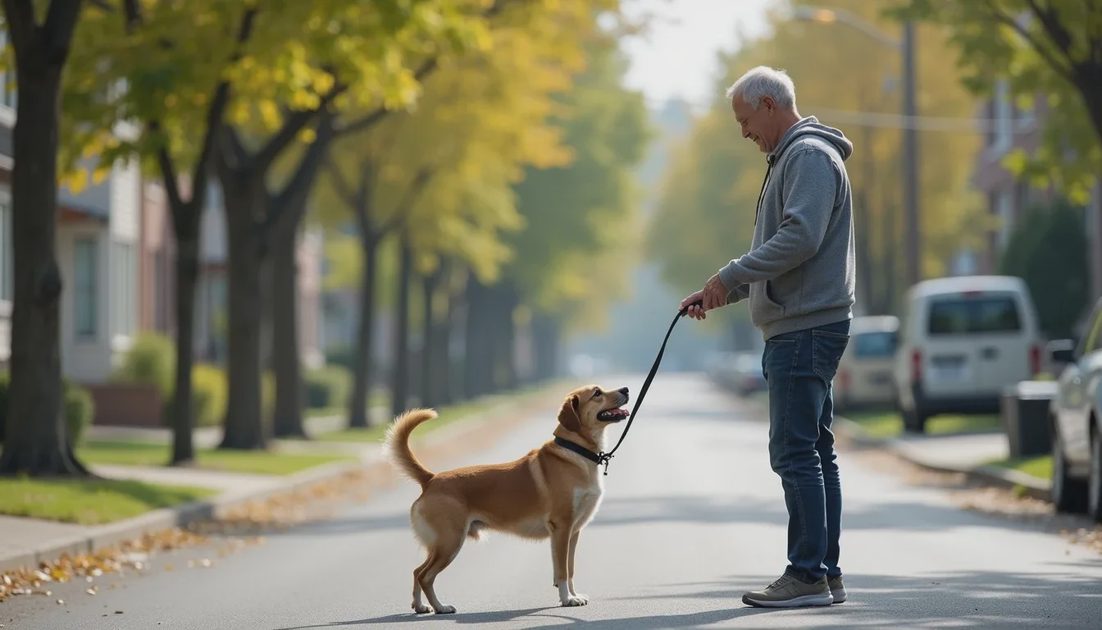
You do not need every walk to be a training walk. You need enough clean practice that the skill can improve. For many busy households, two or three short sessions in quieter windows each week, combined with sensible management the rest of the time, produce steadier progress than trying to train hard on every outing.
The quieter sessions build the behavior. The busier walks test and eventually proof it—once the foundation is strong enough to handle the extra difficulty.
Final Thought
The best time to practice walking skills is the time when your dog can actually succeed. For many of us, that is not the most convenient time on our calendar. Shifting even some of the practice into quieter windows removes unnecessary difficulty and lets the dog learn the behavior you actually want.
Train the dog in front of you—at an hour when that dog still has the capacity to learn. Progress has four paws and a messy middle. Sometimes the most useful adjustment is not a new technique, but a better time of day.




Letters
No letters yet — be the first to write.