
Learning how to stop a dog from pulling on leash can feel impossible when every walk begins with your dog hitting the end of the leash, coughing, and dragging you toward the nearest smell. I have been there with Pepper, my cattle-dog mix. The sidewalk was suddenly a racetrack, and I was the unwilling passenger. The good news is that loose-leash walking is not a personality test. It is a skill your dog can practice in small, manageable pieces.
Start by changing the goal
A polite walk does not mean your dog must march beside your knee for thirty minutes without looking around. That expectation is too difficult for many dogs and makes owners feel defeated before training has really started. A more useful goal is a leash that stays loose for a few steps, followed by permission to sniff, move, or investigate.
Dogs pull because pulling works. It gets them closer to a tree, another dog, a person, or a fascinating food wrapper. When the pulling produces access, the behavior becomes stronger. To learn how to stop a dog from pulling on leash, you need to make loose-leash walking more rewarding and pulling less productive without turning the walk into a constant battle.
Begin in a quiet area, such as your living room, driveway, or a nearly empty parking lot. Use a well-fitted harness or flat collar, a standard six-foot leash, and small, soft treats. Avoid retractable leashes during early practice because the constant tension makes it harder for your dog to notice the difference between loose and tight.
When the leash is loose, mark the moment with a cheerful “yes” and deliver a treat near your leg. Then take one or two steps and reward again. You are not bribing forever; you are showing your dog exactly which choice makes good things happen.

Teach the leash game before leaving home
One reason walks fall apart is that the training begins at the front door, where excitement is already high. A dog who cannot pause while you clip on the leash is not ready for a busy neighborhood loop. Practice the first few steps indoors, where you can succeed quickly.
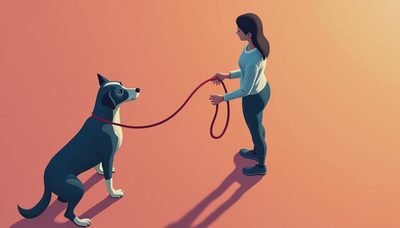
Stand still and wait for your dog to glance toward you or soften the leash. Reward that choice. Walk three steps, stop, and reward if the leash remains slack. If your dog rushes ahead, stop moving rather than pulling backward. The instant your dog turns, returns, or creates slack, praise and continue. This teaches that tension pauses the trip, while a loose leash keeps the adventure moving.
This is a central part of how to stop a dog from pulling on leash: remove the accidental reward of forward motion. You do not need to jerk the leash, shout, or perform a dramatic about-face every few seconds. Quiet consistency is easier for both of you to understand.
Keep these sessions short. Five minutes can be productive; twenty frustrated minutes can undo your patience. End while your dog is still able to think. If your dog is bouncing, grabbing the leash, or ignoring food, the environment is probably too stimulating. That was information, not failure.
Use real-life rewards, not just treats
Food is useful, but it is not the only reward available on a walk. Sniffing, greeting a familiar neighbor, reaching a patch of grass, and moving toward a favorite route can all reinforce good leash behavior. This matters for dogs who lose interest in treats outdoors.
Try a simple pattern: walk with a loose leash for five steps, say “go sniff,” and let your dog investigate for thirty seconds. Then call your dog back with a happy voice and resume walking. The sniff break is not a distraction from training. It is part of the reward system and gives your dog an appropriate way to enjoy the world.
If your dog pulls toward a tree, stop several feet away. Wait for even a small release of tension, then move toward the tree. Over time, your dog learns that pulling does not control your feet, but calm behavior can make the interesting thing happen. This approach makes how to stop a dog from pulling on leash much more practical than demanding perfect attention.

Choose equipment that helps without pretending to train
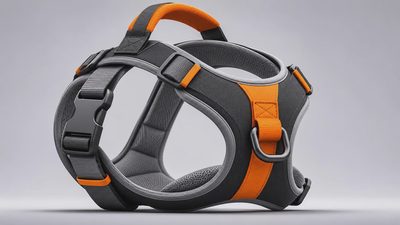
Equipment cannot replace teaching, but the right setup can make practice safer and more comfortable. A front-clip harness can reduce a dog’s leverage by turning the body slightly when the dog surges forward. A back-clip harness is often comfortable for everyday walking, although some strong pullers can lean into it. A properly fitted flat collar works well for many dogs who already have basic leash skills.
Check that two fingers fit comfortably beneath a collar or harness strap, and inspect the skin under the legs after walks. Avoid choke chains, prong collars, and leash corrections if your goal is reward-based communication. Pain can interrupt a behavior in the moment without teaching your dog what to do instead, and it can make triggers feel more threatening.
For a very powerful dog, a certified force-free trainer can help you compare equipment and handling techniques in person. If your dog lunges at dogs, bicycles, or strangers, safety comes first. Increase distance, cross the street, or choose a quieter route while you build skills.
Make the neighborhood easier to learn in
Training succeeds when the difficulty matches the dog in front of you. A quiet morning may be better than the crowded after-work period. Start with one block rather than a three-mile goal. Let your dog sniff before asking for focused walking, and carry enough treats to reward the behavior you want.
Watch for early signs that your dog is becoming overwhelmed: a closed mouth, hard staring, frantic scanning, jumping, whining, or refusal of food. Do not wait for a full pulling episode. Turn away, create distance, or pause behind a parked car. Then reward any glance back toward you.
Owners often ask how to stop a dog from pulling on leash when the dog behaves perfectly indoors but falls apart outside. The answer is usually not more force; it is a smaller step between the living room and the busy sidewalk. Practice in the hallway, then the porch, then the driveway, and finally a calm section of the block.
A simple plan for the next seven days
On day one, practice name recognition and leash slack indoors for five minutes. On day two, repeat near the front door without starting the walk. On day three, take a short driveway or hallway session. During the next few days, walk only as far as your dog can manage while still eating and responding to you.
Write down three details after each outing: where your dog started pulling, what happened just before it, and what helped. You may notice patterns, such as barking dogs behind fences, a certain intersection, or the final ten minutes when your dog is tired. Those notes turn vague frustration into useful information.
Progress will not be perfectly linear. Pepper still has days when a squirrel appears and all previous lessons seem to evaporate. I shorten the route, reward the first calm choice, and try again later. That is how to stop a dog from pulling on leash in real life: repeatable practice, realistic expectations, and enough flexibility to train the dog in front of you.
If pulling remains intense, your dog has injured your shoulder, or your dog reacts aggressively, contact a certified professional who uses humane, reward-based methods. A calmer walk is worth getting support, and you do not have to solve every piece alone.


Letters
No letters yet — be the first to write.