
If every walk starts with your dog towing you toward the sidewalk, you are not failing at dog ownership. Your dog has simply practiced pulling because pulling works: it gets them closer to a squirrel, mailbox, smell, or neighbor. Learning how to teach a dog to walk nicely means changing that pattern in small, repeatable steps. You are not trying to create a robot. You are building a shared habit that makes room for sniffing, curiosity, and a loose leash.
Start with the walk you can actually train
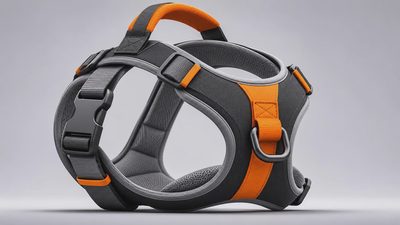
Before heading around the block, choose equipment that gives you information without creating pain. A regular six-foot leash and a well-fitted Y-shaped harness are a reasonable starting point for many dogs. A flat collar can work for a dog who already walks calmly, but avoid using leash corrections, choke chains, or prong collars as a shortcut. A front-clip harness can reduce your dog’s leverage while you practice, although it does not teach the behavior by itself.
Begin in the least exciting location available. That might be your living room, driveway, apartment hallway, or a quiet patch of grass. Bring pea-sized treats that your dog loves, such as chicken, cheese, or a soft commercial training treat. Say your dog’s name, wait for a glance, and reward beside your leg. Take one step, reward. Take another step, reward again. This is the foundation of how to teach a dog to walk nicely: make the position near you worthwhile before asking for it beside traffic and barking dogs.
Keep the first practice session to three or five minutes. End while your dog can still think. If you wait until the leash is tight and your dog is spinning, you have asked for more than the current environment allows. That was information, not failure.
Teach what a loose leash means
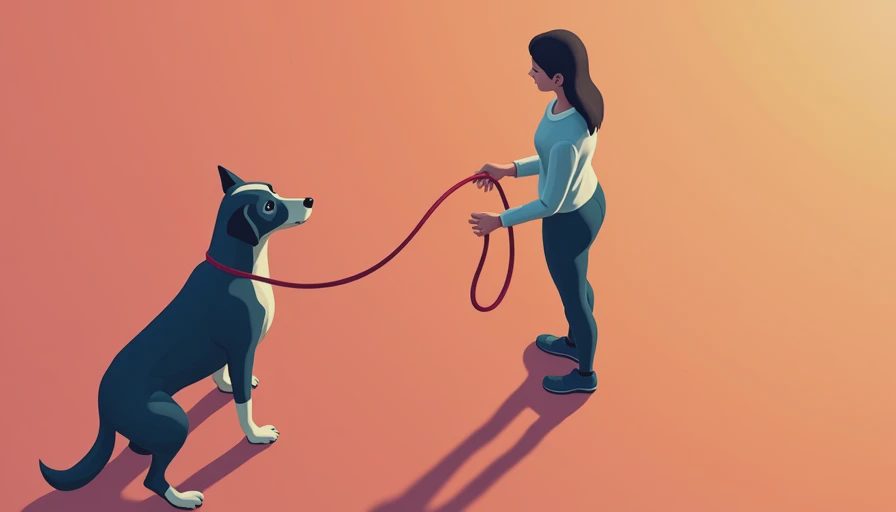
A loose leash is not the same as a strict heel. Your dog can walk slightly ahead, behind, or to either side as long as the leash forms a soft curve. This gives your dog more freedom and gives you a clear rule to reinforce.
Walk forward and quietly deliver a treat whenever the leash stays loose. Feed near your knee rather than stretching your hand out in front, because the delivery location helps your dog understand where good walking happens. If your dog reaches the end of the leash, stop moving. Do not yank backward or repeat “no” for thirty seconds. Wait for even a small choice to turn toward you, then reward and resume walking.
At first, your dog may pull again immediately. That is normal. You are changing a well-rehearsed habit, not flipping a switch. If stopping creates frustration, try turning calmly and walking in another direction. Praise your dog when they follow. Use this sparingly and gently; the goal is communication, not making your dog dizzy or guessing at your expectations.
Use sniffing as a reward, not an enemy
Many walks become difficult because people treat sniffing as wasted time. For dogs, smelling the pavement is closer to reading the neighborhood newspaper. Removing every interesting smell can make the walk more frustrating and less satisfying.
Ask for a few loose-leash steps, then say a consistent release cue such as “go sniff.” Walk with your dog to a safe patch and allow a minute or two of investigation. When you are ready to continue, use your dog’s name, offer a treat near your leg, and move away once they turn toward you. This pattern teaches your dog that staying connected does not mean losing all freedom.
You can use the same idea with a favorite tree, a grassy verge, or a quiet bench. Reward the behavior you want, then provide access to something your dog already wants. That is more practical than expecting food to compete with every smell for the entire walk. This is one of the most useful pieces of how to teach a dog to walk nicely because it makes cooperation pay in real-life dog currency.
Increase distractions one layer at a time
A dog who walks beautifully in the kitchen may pull hard near a school, pet store, or busy intersection. That does not mean the training disappeared. The surroundings became much harder. Train the dog in front of you, not the imaginary dog from a polished video.
Change only one factor at a time. You might move from the living room to the driveway, then to a quiet street, then to a familiar route at a less busy hour. If your dog cannot eat, keeps scanning, vocalizes, or hits the end of the leash repeatedly, create more distance from the trigger and make the task easier. A U-turn toward a quiet driveway is a training choice, not an embarrassing retreat.
For dogs who bark or lunge at other dogs, skip crowded greetings while you build skills. Cross the street, step behind a parked car, or leave the area before your dog reaches the point of exploding. A certified force-free trainer can help you create a specific behavior plan, especially if fear or aggression is involved. Pain, sudden behavior changes, or mobility problems also deserve a veterinary conversation.
Build a realistic weekly routine
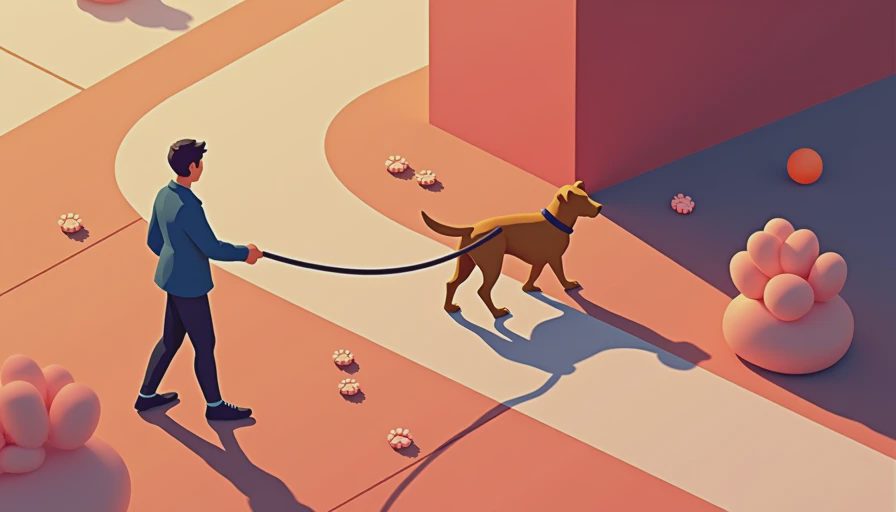
Consistency matters more than marathon walks. Try two or three short training walks during the week, even if each lasts only ten minutes. On another outing, prioritize decompression: choose a quiet area, use a longer leash where legal and safe, and let your dog sniff without constant instruction. The balance keeps practice from becoming a chore for both of you.
Keep a small notebook beside the leash. Record the location, approximate duration, biggest distraction, and what helped. For example, you might notice that your dog handles loose-leash walking for eight minutes in the morning but struggles after sunset when the neighborhood is louder. That observation gives you a useful next step: practice after dinner in a quieter location before attempting the full route.
Everyone in the household should use similar cues and rules. If one person allows pulling toward every dog while another stops each time, your dog receives mixed feedback. You do not need identical personalities, but agree on the release cue, treat location, and what happens when the leash tightens.
Common mistakes that slow progress
One common mistake is starting with the hardest walk of the day. If your dog has been inside for hours and immediately sees a rabbit, the first five minutes are not ideal for teaching. Offer a brief indoor game, scatter a few treats for sniffing, or practice attention in the hallway first.
Another mistake is rewarding only perfect stretches. Notice the tiny wins: your dog checks in, softens the leash, turns away from a distraction, or walks past a driveway without pulling. Those moments are the raw material of how to teach a dog to walk nicely. Reinforce them before they vanish.
Finally, do not measure success only by distance. A calm ten-minute walk with several sniff breaks can be more valuable than a hurried mile filled with pulling. Progress has four paws and a messy middle. Some days will look worse because the weather, route, energy level, or neighborhood activity changed.
Your next small step
Today, practice indoors with five treats and a leash for three minutes. Reward your dog for looking at you, standing near you, and taking one relaxed step. Tomorrow, repeat near the front door or driveway. When that feels easy, add a quiet sidewalk and keep the session short enough that your dog can succeed.
That is how to teach a dog to walk nicely without turning every outing into a battle: reward connection, respect your dog’s need to explore, and make the environment easier when necessary. If pulling remains intense after steady practice, invite a qualified reward-based trainer to watch a walk and identify the missing piece. You do not need perfection before enjoying the neighborhood together; you need a manageable plan and the patience to repeat it.

Letters
No letters yet — be the first to write.