Dog dental care is one of those jobs that sounds simple until your dog clamps their mouth shut, backs away from the toothbrush, or turns toothpaste into a snack. I have been there. Pepper once treated a soft-bristled brush like an insult, while Milo believed every bathroom visit was an invitation to search for dropped food. The goal is not a perfect routine performed in a perfect home. It is a small, repeatable habit that protects your dog’s comfort and gives you useful information about their health.
Dogs can develop plaque, tartar, gum inflammation, and painful dental disease just as people can. A dog might continue eating while hiding discomfort, so waiting for obvious signs such as refusing food can mean the problem has progressed. A few calm seconds of observation today, followed by one manageable practice step, is a good place to start.
What Dog Dental Care Actually Includes
Good dog dental care has several parts. Daily brushing is the most direct way to remove plaque before it hardens into tartar. A veterinary examination helps identify problems below the gumline, broken teeth, loose teeth, oral growths, or pain you cannot see at home. Food, dental chews, and products carrying the Veterinary Oral Health Council seal can support the routine, but they do not replace brushing or professional care.
Start by lifting your dog’s lip when they are relaxed. Look for yellow or brown buildup, red or swollen gums, bleeding, unusual odor, missing teeth, or a tooth that looks gray, purple, or cracked. Do not force the mouth open or poke a painful area. A dog who turns away is communicating something. That was information, not failure.
A strong odor deserves attention, especially when it is new or noticeably worse. Bad breath is not simply a normal dog feature; it can reflect trapped food, gum disease, infection, or another medical issue. Your veterinarian can tell the difference between ordinary surface buildup and a problem requiring treatment.
How to Introduce Brushing Without a Wrestling Match
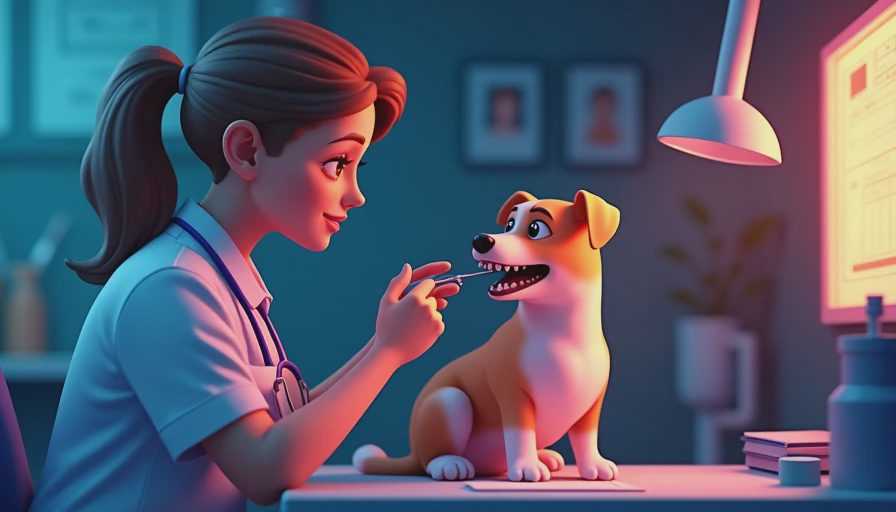
The most useful dog dental care plan begins below your dog’s tolerance limit. For the first few sessions, skip the brush. Touch the side of your dog’s cheek, lift the lip for one second, then offer a pea-sized reward. Repeat once or twice and stop while the dog is still comfortable. You are teaching that mouth handling predicts something pleasant, not that a surprise inspection is coming.
Next, let your dog lick pet-safe toothpaste from your finger. Never use human toothpaste because ingredients such as xylitol can be dangerous to dogs, and foaming formulas are not designed for them. Once the flavor is familiar, rub one or two outside tooth surfaces with your finger or a piece of gauze. The outside surfaces of the upper teeth often collect the most plaque because they sit against the cheeks.
Introduce a dog toothbrush after several easy sessions. A small soft brush or a finger brush can work, although a finger brush is not appropriate if your dog is likely to bite. Use gentle circles for a few seconds, focusing on the canine teeth and cheek-side molars. Gradually build toward about two minutes, but a calm 20-second session is more useful than a two-minute struggle.
Try brushing after a walk, when your dog is settled but not exhausted. Keep the supplies beside the treat jar, and use the same quiet phrase each time. If Pepper walks away, I do not follow her around the house with the brush. I reset later with an easier step. Train the dog in front of you, not the imaginary dog who cooperates on the first attempt.
Choosing Chews, Toys, and Dental Products
Dog dental care can include chewing, but “hard” does not automatically mean “healthy.” Antlers, hooves, hard nylon bones, and other extremely rigid objects can fracture teeth. A useful rule is that you should be able to press a fingernail into the material, or at least choose a product with clear safety guidance for your dog’s size and chewing style. If a chew is so hard that it would not bend or dent at all, I skip it.
Look for the VOHC seal when comparing dental chews, diets, water additives, or wipes. The seal indicates that a product has met specific standards for plaque or tartar control, but it is not a promise that every dog will tolerate it or that it will clean every tooth. Supervise chewing, follow package size instructions, and remove a piece that becomes small enough to swallow whole.
A rubber toy with a textured surface can encourage chewing without the same tooth-fracture risk as a rock-hard object. It is also easier to inspect and wash. Avoid toys with damaged seams, loose pieces, or stuffing your dog can swallow. Dental treats can add roughly a few dozen calories, so account for them if your dog gains weight easily.

When a Veterinary Cleaning Is the Right Next Step
Home dog dental care cannot remove established tartar below the gumline. A veterinarian may recommend an anesthetized dental cleaning so the team can examine each tooth, clean above and below the gums, polish the surfaces, and take dental X-rays when needed. X-rays matter because a tooth can look acceptable above the gumline while its root is damaged underneath.
Ask for an estimate before the appointment. Costs vary by location, the dog’s size, bloodwork, anesthesia monitoring, X-rays, and whether extractions are necessary. A straightforward cleaning might cost several hundred dollars, while extensive disease can run considerably higher. Planning for routine exams is usually easier than waiting for an emergency involving swelling, a broken tooth, or an inability to eat.
Call the veterinary office promptly if your dog has facial swelling, pus, bleeding that does not stop, sudden trouble eating, repeated pawing at the mouth, or a loose tooth after an injury. Do not give human pain medication unless a veterinarian specifically directs you; common household medicines can be toxic to dogs.
A Realistic Weekly Routine
The best dog dental care routine is the one that survives busy weeks. On Sunday, check the mouth in good light and wash the brush. On three or four evenings, practice brushing for 20 to 60 seconds. Offer a veterinarian-approved chew on another day, then clean the toy and note whether it caused stomach upset. Write down gum redness, odor, broken teeth, or changes in eating so you can describe them accurately at an appointment.
If your dog will not tolerate brushing yet, keep practicing lip lifts and reward calm stillness. You can also ask your veterinarian or a qualified reward-based trainer to demonstrate handling. Some dogs need weeks of tiny steps, particularly if previous mouth pain made handling frightening. Progress has four paws and a messy middle.
One small action for today: while your dog is resting, lift the lip for one second, look at the gumline, and give a reward. Do not chase, pry, or turn the check into a battle. That brief observation is the beginning of dog dental care, and it gives you a clearer picture of what your dog needs next.


Letters
No letters yet — be the first to write.