I used to think any treat was a good treat.
I would grab whatever was in the jar, head out the door, and wonder why Pepper suddenly found the sidewalk smells more interesting than my pockets. The problem was not her motivation. The problem was that I was offering something she only mildly cared about in a situation where the environment was paying better.
Rewards are not one-size-fits-all. What works in the living room often fails on the first distracting street. Learning to match the reward to the difficulty is one of the highest-leverage skills in everyday training.
Why “Just Use Treats” Is Incomplete Advice
Food is convenient and easy to deliver, but not all food is equal to the dog in front of you. Three factors matter more than most people realize:
The dog’s personal preference
The difficulty of the environment
How the reward is delivered
Ignore any one of these and the training session starts to feel like you are working harder than the dog. A reward that barely registers will not compete with real-world distractions, no matter how perfectly you time it.
How to Find Out What Your Dog Actually Likes
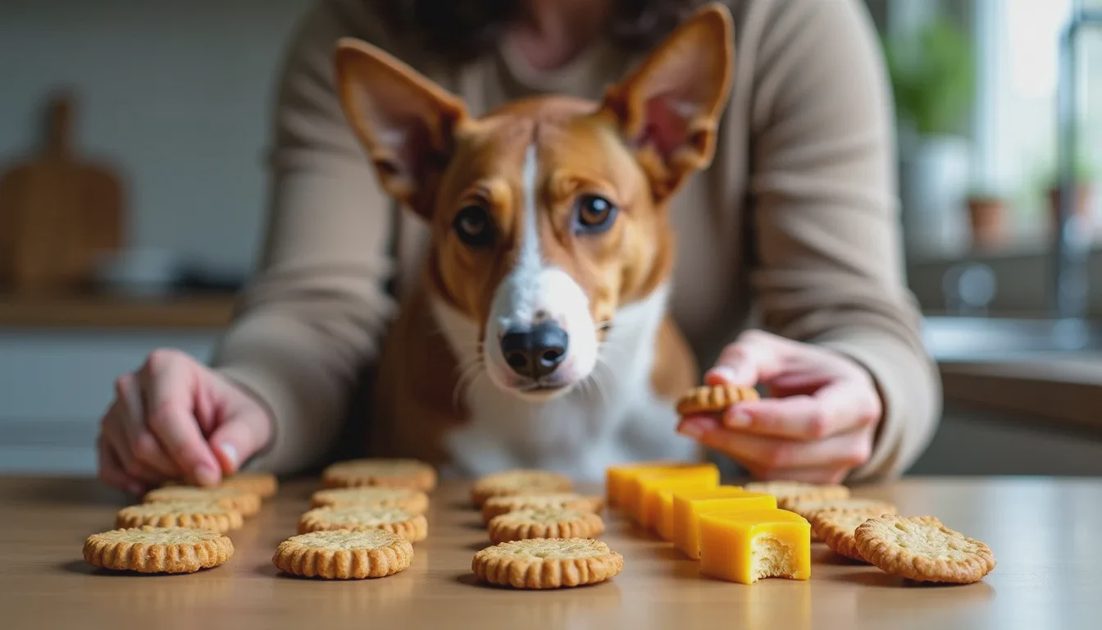
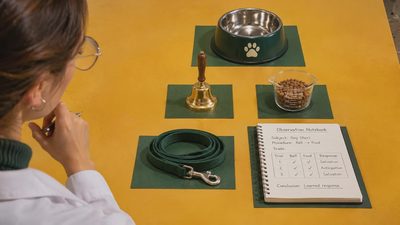
You do not need a formal laboratory test. A simple preference check works well:
Take three or four options (for example: regular kibble, a commercial training treat, a piece of cheese, a bit of chicken or freeze-dried liver).
Present two at a time and see which one the dog chooses first.
Repeat a few times in a quiet setting so the results are clear.
Most dogs will show a consistent ranking. Write it down. That ranking becomes the foundation of your reward menu. Preferences can shift over time or with different levels of hunger, so it is worth rechecking occasionally.
Building a Practical Reward Menu
I keep three levels for Pepper and Milo. This simple structure makes it easy to match reward value to the situation without overthinking every session.
Low-value
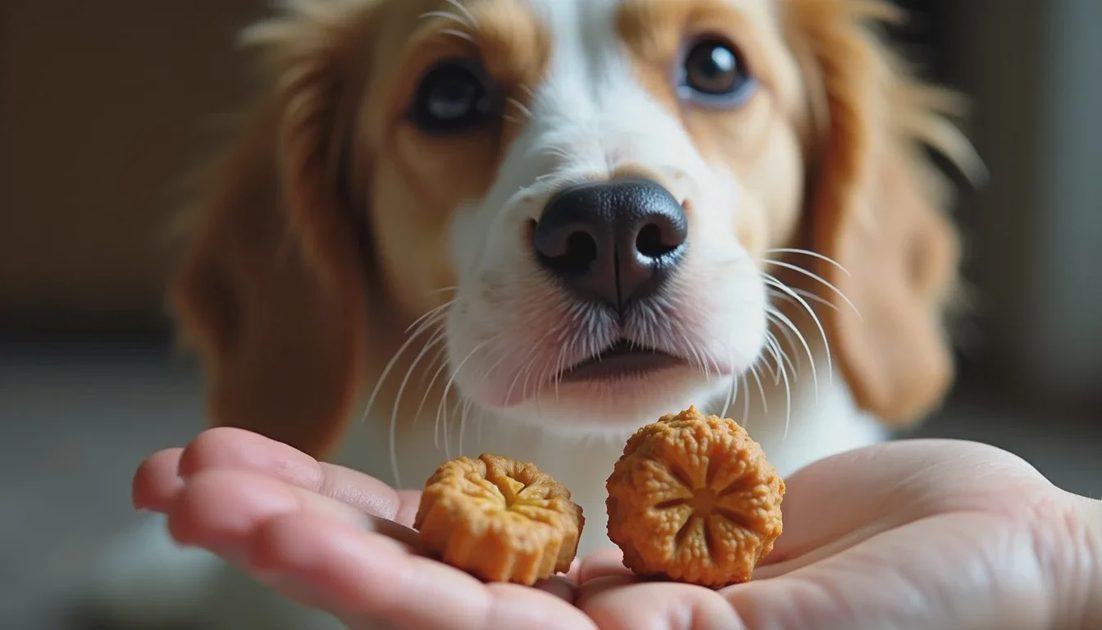
Everyday kibble or basic biscuits.
Used for easy behaviors in the house with no distractions—simple sits, hand touches, or short mat work when the environment is quiet.
Medium-value
Commercial soft training treats or slightly better food.
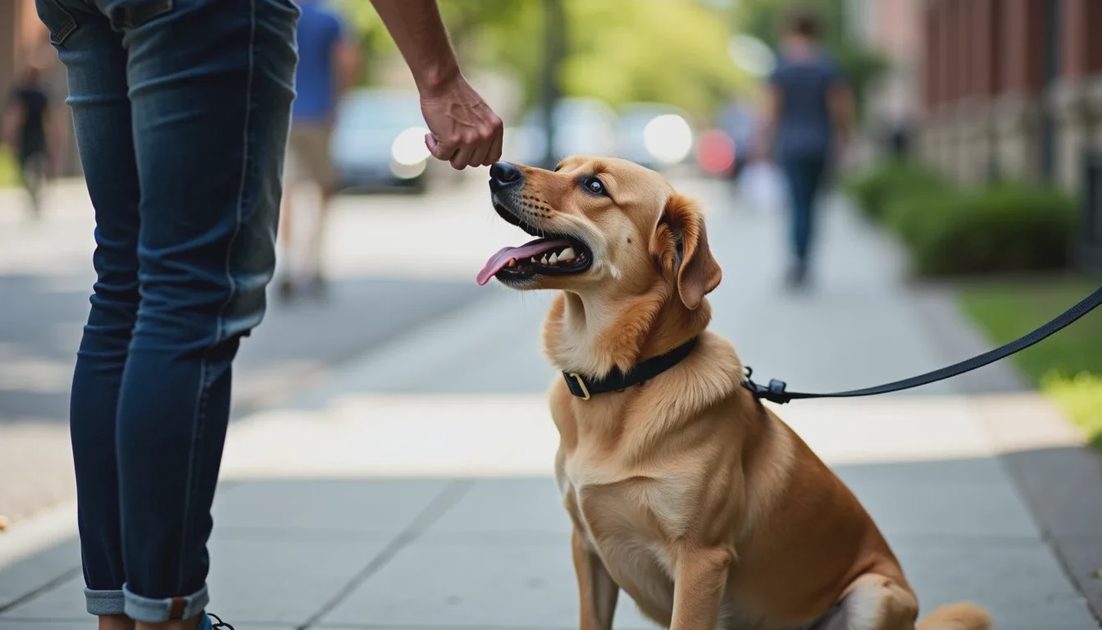
Used for moderate difficulty: quiet sidewalks, mild distractions, short stays, or early stages of a new skill.
High-value
Cheese, chicken, freeze-dried liver, or whatever ranks at the top of the dog’s preference list.
Reserved for hard situations: other dogs nearby, high-distraction walks, new environments, or moments when the dog is struggling to stay engaged.
The key is saving the highest value for when you truly need it. If you use chicken for everything, it stops being special and you lose your strongest tool.
Delivery Matters as Much as the Food Itself
Even a high-value treat loses power if the delivery is slow or awkward. A few details that make a noticeable difference:
Keep treats accessible (treat pouch or easily reached pocket, not a sealed bag at the bottom of a backpack).
Deliver quickly after the marker word or click so the dog clearly connects the behavior with the payoff.
Sometimes toss the treat to create movement and reset the dog’s position.
For some dogs, a short burst of play or access to a desired smell can outrank food entirely.
I learned this clearly with Milo. On some walks he would ignore even good food but work hard for the chance to sniff a particular patch of grass. That sniff became a planned reward. The principle is the same: use what the dog in front of you actually values in that moment.
Common Reward Mistakes I See (and Made)
1. Using the same treat everywhere
The environment changes. The reward should too. A treat that works in the kitchen often fails to compete with sidewalk distractions.
2. Assuming the dog “should” work for kibble
Motivation is not a moral issue. It is information about how hard the task feels to the dog and how valuable the available reward is in comparison.
3. Waiting too long to deliver
Timing turns a reward into clear information. Late rewards create confusion about which behavior is being paid.
4. Forgetting non-food rewards
Play, freedom to sniff, greeting a person, or being released to run can all function as reinforcement when used intentionally. Some dogs will work harder for these than for food in certain contexts.
5. Using high-value rewards for easy behaviors
This is the opposite problem. If the best rewards are spent on simple tasks, you have nothing stronger left when the difficulty rises.
A Simple Way to Use This Tomorrow
Before your next training session or walk, ask three quick questions:
How hard is this going to feel for my dog?
Which reward level matches that difficulty?
Do I have it ready to deliver quickly?
If the dog starts ignoring the reward, treat that as data. Either the task is too hard or the reward is too low for that moment. Adjust one of those two variables instead of repeating the cue louder or assuming the dog is being stubborn.
How Reward Choice Affects the Whole Training Picture
When rewards are well matched to difficulty, several things improve:
The dog stays engaged longer
You need fewer repetitions to see progress
Frustration drops because the dog is clearer about what pays
You can raise criteria more smoothly because the payoff remains meaningful
Training feels more like a conversation and less like a struggle for attention
Poorly matched rewards create the opposite effect: the dog disengages, the trainer works harder, and both sides leave the session less confident.
Final Thought
Rewards are not bribes. They are information that tells the dog, “That was worth repeating.” When you choose rewards your dog actually cares about—and match them to the situation—you stop fighting for attention and start having a clearer conversation.
The dog in front of you already has opinions about what is valuable. Your job is to listen to those opinions and use them well.

Letters
No letters yet — be the first to write.