

I still have the notebook.
Page one is titled “Pepper – 4-Week Loose-Leash Plan.” It has neat columns for days, goals, and reward schedules. It looks very responsible.
It was also almost completely wrong for the dog I actually had.
This is the story of that plan, why it failed, and what it taught me about writing training plans that survive contact with real life. The failure was embarrassing at the time. Looking back, it was one of the most useful things that happened in our early training.
The Plan I Wrote
I had just started learning about reward-based training. I was enthusiastic and a little rigid. The plan looked clean and logical on paper:
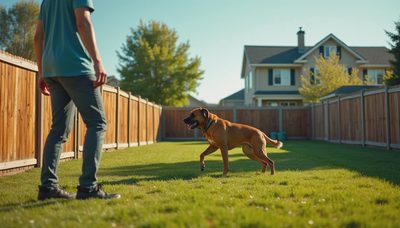
Week 1: Practice in the backyard only
Week 2: Move to the quiet sidewalk in front of the house
Week 3: Add mild distractions
Week 4: Full neighborhood walks with a loose leash
It sounded reasonable. It ignored almost everything about Pepper’s actual starting point, her reinforcement history, and the real difficulty of the sidewalk environment.
What Actually Happened
Week 1 went okay in the backyard. Pepper could walk near me for short stretches when there was nothing more interesting competing for her attention.
Week 2 fell apart the moment we stepped onto the sidewalk. Every smell, every distant dog, every leaf moving in the breeze was more interesting than my treats. By day three of Week 2 I was already behind my own schedule and starting to feel like a failure.
I kept trying to force the original timeline instead of adjusting to the dog in front of me. The more I pushed to stay “on plan,” the more frustrated both of us became.
The Three Things the Plan Missed
1. Pepper’s reinforcement history was already strong for pulling and sniffing
My backyard practice had not competed with the real-world payoff of the sidewalk. For months before I started formal training, pulling had worked. It got her to the next smell. That history did not disappear just because I wrote a tidy four-week schedule.
2. I had not built a strong enough reinforcement history for walking near me
A few sessions in the yard were not enough to outweigh years of practicing the opposite. I needed many more successful, heavily reinforced repetitions at a much easier level before the sidewalk was a fair ask.
3. The plan was written around my calendar, not around Pepper’s learning speed
Dogs do not care about neat four-week schedules. They learn according to the clarity of the information, the value of the rewards, and the difficulty of the environment. My timeline was about my desire for progress, not about what she was actually ready for.
What I Changed
I threw out the original timeline and started asking better questions:
What can this dog succeed at today?
How small can I make the steps?
How do I make walking near me more valuable than the environment for short periods?
The new approach looked much less impressive on paper and worked much better in practice:
Short sessions (often only 3–5 minutes)
Very high rate of reinforcement at the beginning
Practice in the least distracting slice of sidewalk I could find
Celebrate small wins instead of measuring against the original plan
End while she was still successful rather than pushing until things fell apart

What This Experience Taught Me About Training Plans
A useful training plan has three qualities:
It starts from the dog’s current ability, not the desired end goal.
It is willing to get smaller when the dog needs it.
It measures progress by improvement, not by sticking to the original calendar.
I still write plans. I just write them in pencil now—both literally and mentally. The plan is a starting hypothesis, not a contract.
A Better Way to Build a Simple Plan
When I help someone start a new skill with their dog, we answer these questions first:
Where can the dog already succeed?
What is the smallest next step?
How will we know it is time to make it slightly harder?
What will we do when it falls apart (because it will)?
That last question is the one my original plan completely lacked. Every useful plan needs a built-in way to lower criteria without drama when the dog shows that the current level is too hard.
How Progress Actually Looked
Pepper eventually learned to walk with a much softer leash. It did not happen in four neat weeks. It happened in a lot of short, imperfect sessions that added up. Some days we made clear progress. Some days we stayed at the same easy level. A few days we went backward and that was information, not failure.
The biggest shift was internal. I stopped treating the calendar as the authority and started treating the dog’s responses as the authority. Once that change happened, the training became less stressful and more effective.

Why Rigid Plans Feel So Appealing
It is comforting to believe that progress can be scheduled. A neat four-week plan gives the feeling of control and competence. The problem is that dogs are living animals with their own histories, thresholds, and competing motivations. A plan that cannot flex becomes a source of frustration instead of a guide.
The most useful plans I write now are short, specific, and temporary. They cover the next few sessions, not the next month. When the dog shows me new information, I update the plan instead of trying to force the dog to fit the old one.
Final Thought
The notebook still sits on my shelf as a reminder. A beautiful plan that does not fit the dog is just paperwork. The real work is watching the dog in front of you and adjusting without taking the setbacks personally.
Pepper eventually learned to walk with a much softer leash. It did not happen because I stuck to the original schedule. It happened because I finally started training the dog who was actually standing next to me on the sidewalk.
Progress has four paws and a messy middle. The messy middle is where the rigid plans get rewritten—and where the real learning begins.



Letters
No letters yet — be the first to write.