
The most useful dog toilet training tips are also the least glamorous: take your dog to the right place often, reward them immediately for going there, and prevent indoor accidents while the habit develops. Start with a predictable schedule rather than waiting for your dog to ask. A puppy, a newly adopted adult, and a dog learning the layout of a new apartment may all need more help than you expect. That doesn't mean anyone is doing it wrong.
Build a schedule around your actual dog
Take your dog out first thing in the morning, after naps, after meals, after play, and before bed. For a young puppy or a dog having frequent accidents, add trips between those events. Some puppies may need a chance to go as often as every hour while awake; others can wait longer. Age, size, health, and recent activity all matter, so treat any schedule as a starting point, not a test your dog has to pass.
Write down when your dog eats, drinks, goes outside, and has accidents for a few days. If there's a puddle at 3 p.m. every afternoon, try a trip at 2:30. That's useful information, not evidence that your dog is stubborn.
Adult dogs can also need a reset, especially after adoption or a move. Give a newly arrived dog frequent opportunities even if you were told they're house-trained. They may know the rule in one home without understanding where the bathroom is in yours.
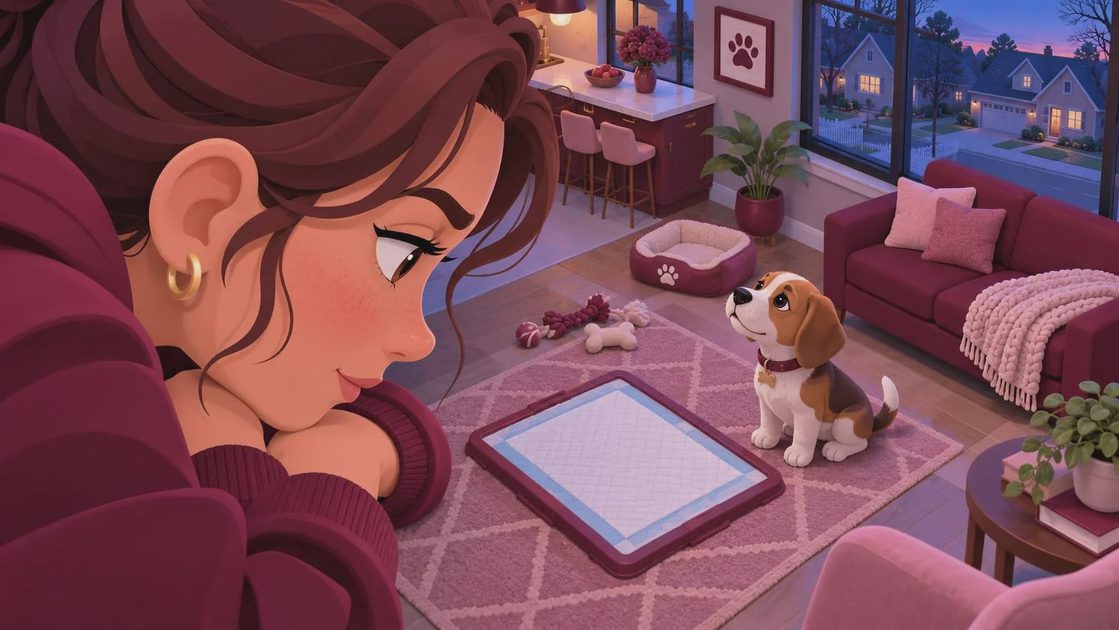
If your workday is longer than your dog can comfortably manage, arrange a midday visit from a dog walker, neighbor, or household member. For a puppy, that might mean more than one visit. An indoor toilet area can be a practical backup when outdoor trips aren't possible, though it may take extra work to teach where that area begins and ends.
Make the outdoor trip easy to understand
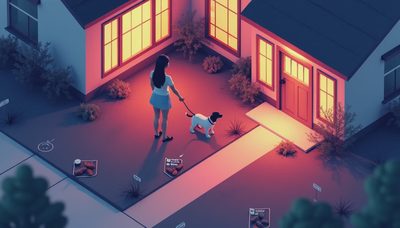
Choose an accessible potty spot and take your dog there on leash. Stand quietly and give them a few minutes to sniff. The leash keeps the trip focused without requiring a big walk every time, which is especially helpful during a rainy midnight outing.
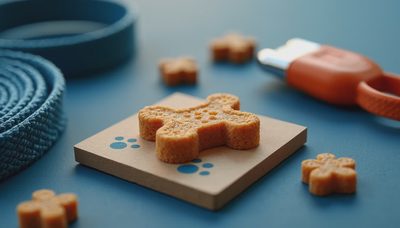
When your dog finishes peeing or pooping, offer a small treat and calm praise right there, within a second or two. Don't wait until you're back inside: the closer the reward is to the behavior, the easier it is for your dog to make the connection. Keep treats near the door so you aren't digging through a coat pocket at the crucial moment.
Once your dog is reliably going in that spot, you can add a cue such as “go potty.” Say it as they begin to go, then reward when they finish. With repetition, you can start saying it before they go. A cue is a convenience, not a button that makes a dog eliminate on command.
If nothing happens after a few minutes, head inside and supervise closely. Try again in 10 to 15 minutes, sooner if your dog starts sniffing or circling. Avoid ending every successful trip immediately: an occasional sniff or short walk afterward helps prevent your dog from learning that going potty makes the fun stop.
Dog toilet training tips for accidents and supervision
Until the routine is reliable, keep your dog where you can notice the early signs: sniffing the floor, circling, wandering away, or heading toward a previous accident spot. Some dogs are subtle, so don't rely on signals alone. A baby gate, a leash attached to you, or time in the same room can make supervision manageable while you cook or answer emails.
If you catch an accident starting, calmly interrupt if you can do so without startling your dog, then guide them outside. Reward them if they finish there. If you find the mess afterward, simply clean it up. Your dog won't connect a delayed scolding to something that happened earlier, and punishment can make them afraid to go in front of you.
Use an enzymatic cleaner labeled for pet urine, following the directions on the bottle. Test it on an inconspicuous area first, and avoid ammonia-based cleaners, which can smell urine-like. If a dog keeps returning to one rug or corner, block access while you rebuild the habit and make sure the area is thoroughly cleaned.
A crate can be helpful for short periods if your dog is comfortable in one and has been introduced to it gradually. It should be large enough for the dog to stand, turn around, and lie down comfortably. It isn't a substitute for timely potty breaks, and a distressed dog shouldn't be left to panic in it. A small, easy-to-clean gated area may be a better choice for some households.
Troubleshoot the pattern, not the dog
If accidents happen right after you come inside, the outdoor trip may have been too distracting, too short, or uncomfortable. Try a quieter spot and give your dog a little more time. Some dogs need to poop after they've already peed, so don't assume the trip is over after the first success.
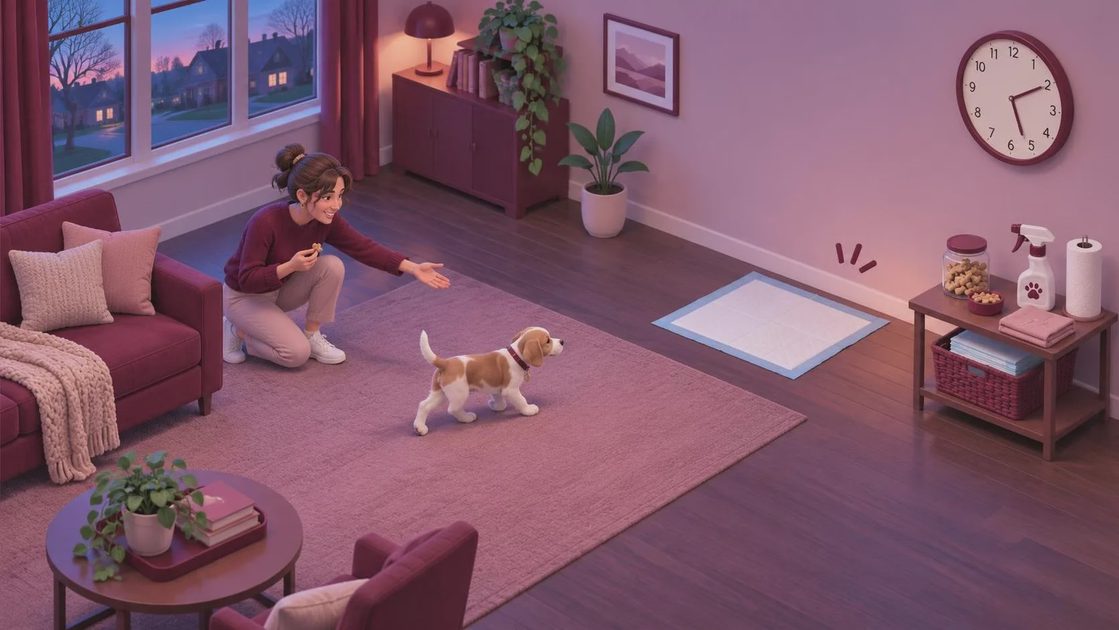
For an apartment dog, account for the elevator and the walk to the designated area. Carry a small puppy if needed and safe to do so, or place a temporary indoor toilet area close to the exit. If you use pads or a grass-style tray, reward the dog for using that specific surface. To transition outdoors, gradually move the indoor station toward the exit while increasing outdoor opportunities; don't remove the backup before your dog can manage the trip.
Nighttime is another place to be realistic. Take your dog out just before bed, keep overnight trips quiet, and return to bed afterward. A young puppy may need an overnight break. If you wake to an accident, set an alarm a little earlier for the next few nights and adjust as your puppy develops.
Know when to call the vet
A dog who suddenly starts having accidents after being reliably house-trained deserves a veterinary check, rather than an assumption that the training has disappeared. Call your vet about increased thirst, frequent small urinations, diarrhea, discomfort, or a noticeable change in habits. Straining to urinate, especially if little or no urine comes out, needs urgent veterinary attention.
Training progress can take weeks or longer, and setbacks happen when schedules change. Today, pick one small starting point: put treats by the door and schedule an extra outing before the time accidents usually occur. Then keep notes and adjust. Progress has four paws and a messy middle.
Letters
No letters yet — be the first to write.