
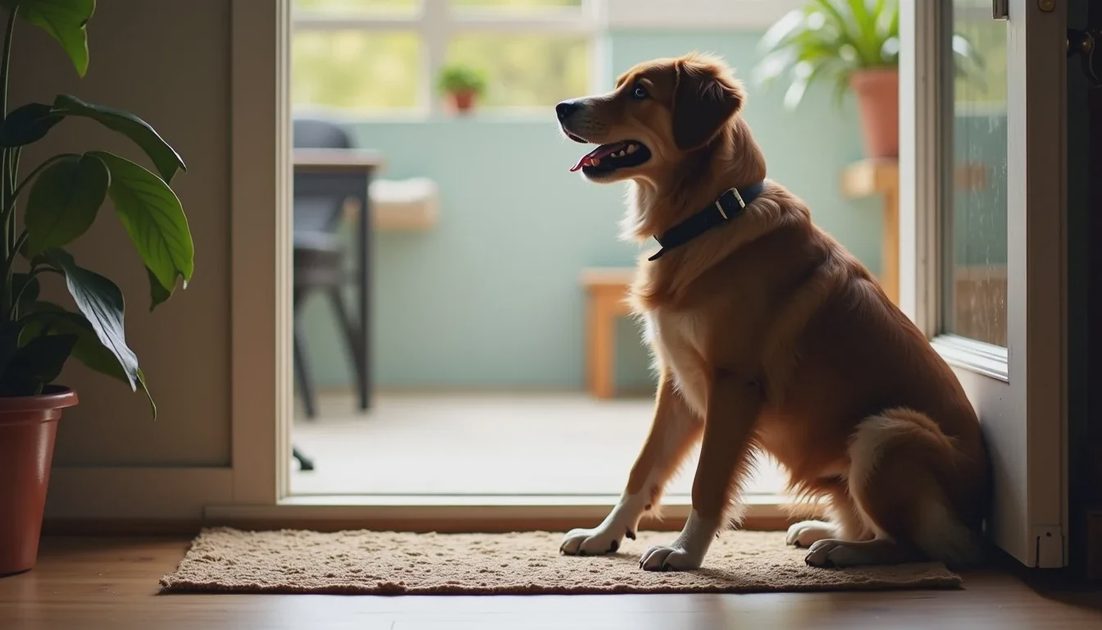
The doorbell rings and the dog erupts.
Barking at the door is one of the most common household complaints, and one of the easiest to make worse. Yelling “quiet,” grabbing the collar, or otherwise punishing the bark often adds more excitement to an already exciting moment. The dog learns that the doorbell predicts a chaotic scene, and the barking continues or intensifies.
There is a more constructive approach: change what the doorbell predicts, and give the dog a clear job that is incompatible with standing at the door barking.
Why Punishment Usually Misses the Point
The bark is an alarm and an outlet for arousal. When we punish the bark, we are punishing the symptom without addressing the underlying pattern:
Doorbell → high arousal → rush to door → bark
Owner reaction often becomes part of the high-arousal event
The dog still feels the same surge when the bell rings. They just may add conflict or suppression on top of it. In many cases the barking becomes more intense or more conflicted because the dog is now dealing with both the original excitement and the owner’s response.
Punishment also fails to answer the most useful question: what should the dog do instead? Without a clear alternative, the dog is left with the same emotional response and no better behavioral option.
The Core Strategy
Teach the dog that the doorbell (or knock) is a cue to go to a specific place and settle, and that staying there pays. At the same time, manage real-life arrivals so the dog does not keep rehearsing the old door-rushing pattern while the new behavior is being learned.
This is the same foundation used for guest preparation, applied specifically to the sound of the doorbell. The goal is not zero sound overnight. The goal is a new pattern in which the doorbell leads to the mat more often than it leads to a prolonged door performance.
Step-by-Step Building Process
1. Teach a reliable place/settle behavior away from the door first
The dog should already know how to go to the mat and stay there for short periods during mild household activity. If this foundation is weak, the doorbell will simply become another cue the dog cannot yet execute under excitement.
2. Pair the doorbell sound with the place behavior at very low intensity
Use a recorded doorbell at low volume or a light knock. The moment the sound happens, cue (or lure) the dog to the mat and reward heavily for going there. Repeat in short sessions. The sound should start predicting movement toward the mat rather than a rush to the door.
3. Build duration on the mat after the sound
Once the dog is moving to the mat on the sound, add a few seconds of staying before you reward and release. Keep early sessions easy and successful. Duration is built gradually so the dog does not learn that the mat is only a brief pause before returning to the door.
4. Practice with real but controlled arrivals
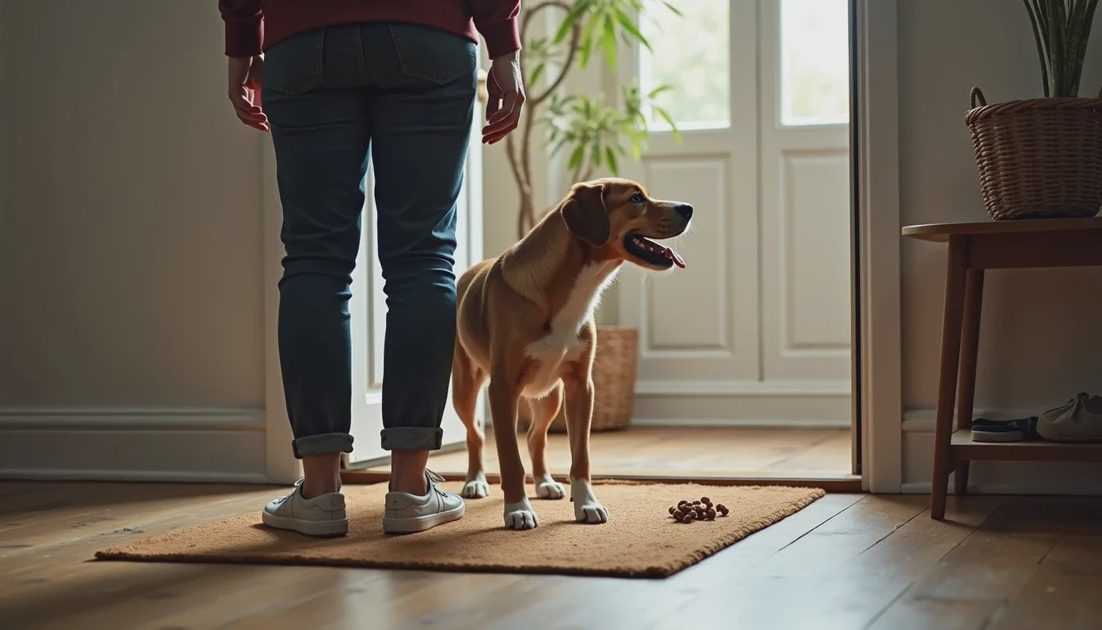
Have a helper ring the bell and enter quietly while you reinforce the dog for staying on the mat. Start with short entries and low-key guests. The goal is clean repetitions, not testing the behavior under maximum difficulty.
5. Manage real life in the meantime
Until the behavior is solid, use leashes, gates, or temporary confinement so the dog cannot practice the full barking-and-rushing sequence on every real doorbell. Management prevents the old pattern from being strengthened while the new one is still being built.
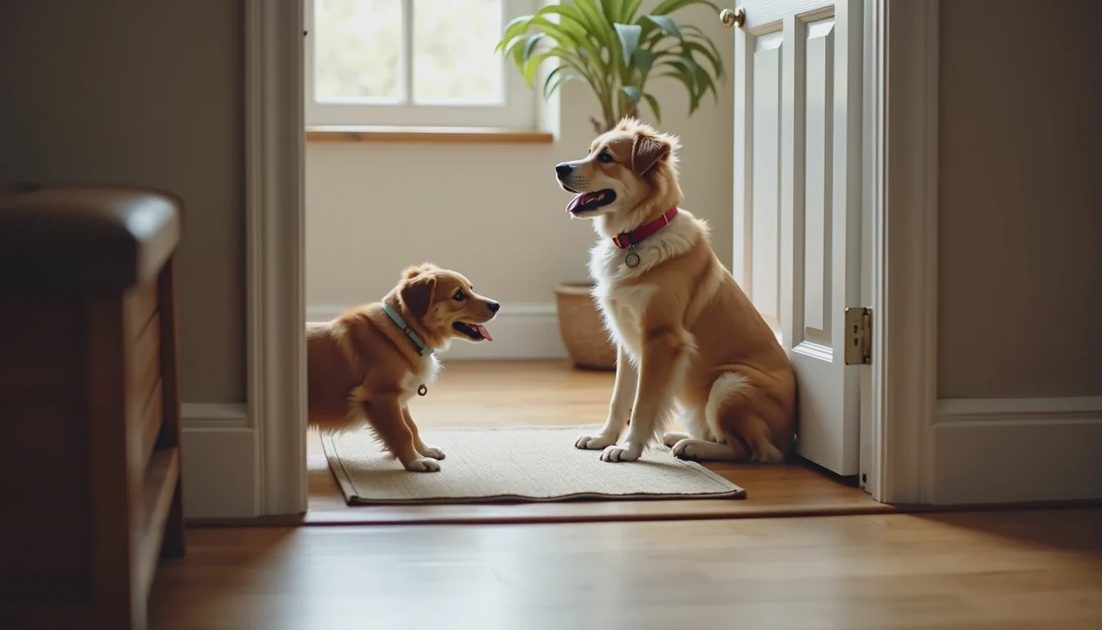
What to Do When the Dog Barks Anyway
Early in training, some barking is normal. Instead of scolding:
Guide the dog to the mat if they have not gone there.
Reward any movement toward the mat or any pause in barking once they are on the mat.
Keep your own arousal low. Quiet, clear handling works better than matching the dog’s intensity.
The presence of some barking does not mean the plan is failing. It means the dog is still in the process of learning a new response to an old trigger. The measure of progress is how often the dog moves toward the mat and how quickly the barking decreases once they are there.
Common Reasons Progress Stalls
The place behavior was not solid enough before adding the doorbell.
Real doorbells are still allowing full rehearsal of the old pattern.
Sessions are too long or too hard, so the dog practices getting up and returning to the door.
Rewards are not valuable enough to compete with the excitement of the arrival.
The trainer is still reacting with high intensity, which keeps the overall arousal elevated.
All of these are adjustable. Make the task easier, protect the new pattern with management, and pay better for the behavior you want.
How This Changes the Household
Once the dog has a practiced mat response to the doorbell, the entryway becomes more manageable. Guests feel more comfortable. The dog has a clear job instead of an undefined surge of excitement. You no longer need to rely on last-second collar grabs or raised voices.
The barking may not disappear completely—some dogs will still give a few alert barks—but the prolonged, escalating performance at the door decreases because the dog has somewhere else to go and something else to do.
Final Thought
Doorbell barking is rarely solved by telling the dog to be quiet after they have already exploded. It is solved by changing the meaning of the doorbell and giving the dog a clear, reinforced alternative before the old pattern runs to completion.
You do not have to punish the alarm. You can teach the dog where to go when the alarm sounds—and make that the better option. Progress has four paws and a messy middle. The messy middle includes a lot of doorbells that still produce some noise while the new pattern is taking root. That is normal. Keep the sessions short, the management consistent, and the reinforcement clear.

Letters
No letters yet — be the first to write.