German shepherd training can feel like a full-time job when your dog is smart, energetic, vocal, and convinced that every moving leaf deserves investigation. I know the feeling. A dog can understand “sit” in the kitchen and still drag you toward a squirrel on the sidewalk five minutes later. That was information, not failure. It showed me that training has to fit the place, the distraction level, and the dog in front of me.
The goal is not a perfectly robotic dog. It is a dog who can make safer choices, recover from excitement, settle at home, and understand what you are asking. With short sessions, clear rewards, and realistic expectations, german shepherd training becomes a series of small habits instead of one giant project.
Start with communication, not control
German shepherds are often observant working dogs, but intelligence does not mean they automatically know household rules. Your dog may notice the delivery truck before you do, react quickly to movement, or become frustrated when a familiar cue suddenly gets harder. Begin by deciding what you want to see instead of only correcting what you dislike.
If jumping is the problem, reward four paws on the floor. If barking at the window is the problem, teach your dog to turn toward you and move to a mat. If pulling starts the walk, pause before the leash becomes tight and reward the moment your dog checks back in. These alternatives give your dog a job that can actually succeed.
Use the same words across the household. “Off,” “down,” and “leave it” should not mean three different things depending on who is holding the treat pouch. Keep rewards small, soft, and easy to swallow. Chicken, cheese, or a favorite commercial training treat can work, but the best reward is the one your dog will notice without becoming frantic.
A useful starting routine is three sessions of two to five minutes each day. Practice a name response, hand target, sit, and settling on a mat. Stop while your dog is still interested. German shepherd training improves faster when the dog expects short, successful lessons instead of a long session that ends in confusion.

Build calm before asking for focus
Many owners try to teach a busy dog to listen only after the dog is already overexcited. That is like trying to explain a parking ticket while someone is blasting a siren beside you. First lower the difficulty. Close the blinds, move away from the front door, use a quieter room, or begin after a sniffing walk rather than immediately after a burst of energy.
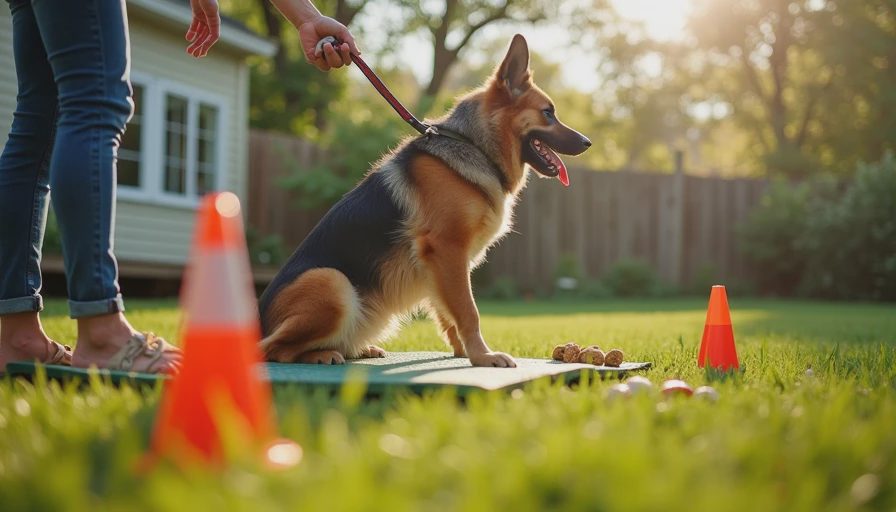
Teach a simple settle routine. Place a mat near your chair. When your dog looks at it, steps toward it, or lies down, quietly deliver a treat between the front paws. Avoid repeatedly saying “settle” while your dog is still pacing. Let the mat become a predictable place where calm behavior pays. Over time, add mild distractions such as standing up, opening a cabinet, or walking a few steps away.
This kind of german shepherd training is not about exhausting the dog until there is no energy left. Physical exercise matters, but so does learning how to come down from excitement. Ten minutes of sniffing, a food puzzle, or a slow search for kibble in a towel can support the nervous system better than endless high-speed fetch for some dogs.
Watch body language. A closed mouth, hard stare, stiff posture, repeated lip licking, or sudden scanning can tell you that the situation is becoming difficult. Increase distance before your dog explodes. A calmer choice made early is more useful than a correction after barking has already taken over.
Make walks easier one piece at a time
Leash pulling is one of the most common reasons people search for german shepherd training, and it is easy to practice accidentally. Every time pulling gets your dog closer to a smell, person, or patch of grass, the pulling may become stronger. You do not need to jerk the leash or win a contest. Change the pattern before the leash becomes tight.
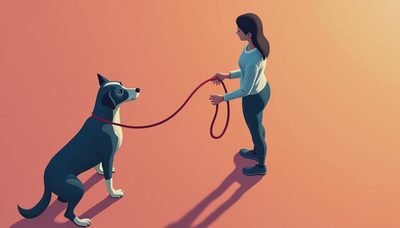
Start in a hallway, driveway, or quiet part of the sidewalk. Reward your dog for walking beside you for two or three steps, then release to sniff with a cue such as “go sniff.” Sniffing is not a reward you have to remove; it can be the reward that makes polite walking worthwhile. Gradually increase the number of steps, but return to an easier location when your dog cannot respond.
For dogs who lunge or bark at people and other dogs, distance is a training tool. Cross the street, step behind a parked car, or turn into a driveway. Feed several treats while your dog notices the trigger and remains able to eat. If the dog is staring, growling, or refusing food, you are too close for learning. This is where a qualified reward-based trainer can help create a safer plan.
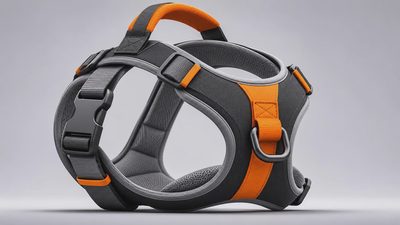
Choose equipment for safety and comfort. A well-fitted front-clip harness can reduce pulling leverage for some dogs, while a sturdy flat collar is useful for identification. Avoid equipment designed to cause pain or fear. The goal of german shepherd training is better communication, not a stronger punishment.
Practice recall without gambling on it
A reliable recall is built in layers. Begin indoors by saying your cue once, moving backward, and rewarding your dog for following. Use an enthusiastic voice, but do not turn the cue into background noise by repeating it six times. If your dog does not respond, make the setup easier rather than adding volume.
Next, practice in a fenced area or on a long line attached according to safe handling instructions. Call from a few feet away, reward generously, and then release your dog back to exploring. If coming to you always ends the fun, your dog will reasonably decide that ignoring you is a better deal. Sometimes call, reward, and immediately send the dog back to sniff.
A long line is not a substitute for supervision. Keep it away from legs, trees, and other dogs, and never use an unreliable recall near traffic. This step in german shepherd training can take weeks or months, especially for adolescent dogs who seem to discover independence overnight.
Handle the messy middle
Progress rarely moves in a straight line. Your dog may walk beautifully for four days and then bark at a garbage truck, steal a sock, or forget every cue when relatives visit. Look at sleep, exercise, pain, recent changes, and the difficulty of the environment before deciding that training has failed. Behavior changes can also deserve a veterinary conversation, particularly when fear, irritability, or sensitivity appears suddenly.
Keep a simple notebook with the date, location, trigger, distance, reward, and result. During german shepherd training, this record can reveal patterns that memory hides. You might discover that your dog listens well before breakfast but struggles after a busy daycare day, or that ten feet from another dog is manageable while six feet is not.
Management is part of good training. Use a baby gate during visitor arrivals, secure food behind a cabinet, close the curtains during delivery hours, and give your dog a quiet retreat. Preventing repeated rehearsal of barking, chasing, or counter surfing gives your new skills room to grow.
A small plan for today
Start with one behavior, not the entire dog. Spend two minutes rewarding your dog for looking at you indoors. Take a five-minute walk in a quiet area and reward three loose-leash steps. Later, place a mat beside your chair and pay for calm pauses. Write down what happened without grading yourself or your dog.
The most effective german shepherd training plan is the one you can repeat on an ordinary Tuesday, while laundry waits and dinner is getting cold. If aggression, severe fear, separation distress, or unsafe chasing is involved, seek help from a certified professional who uses humane, reward-based methods. You do not have to solve the hardest behavior alone.
Train the dog in front of you, not the imaginary perfect dog from a video. Some days will be smooth, others will be noisy and covered in dog hair. Progress has four paws and a messy middle, but small clear choices can turn that middle into a calmer life together.

Letters
No letters yet — be the first to write.