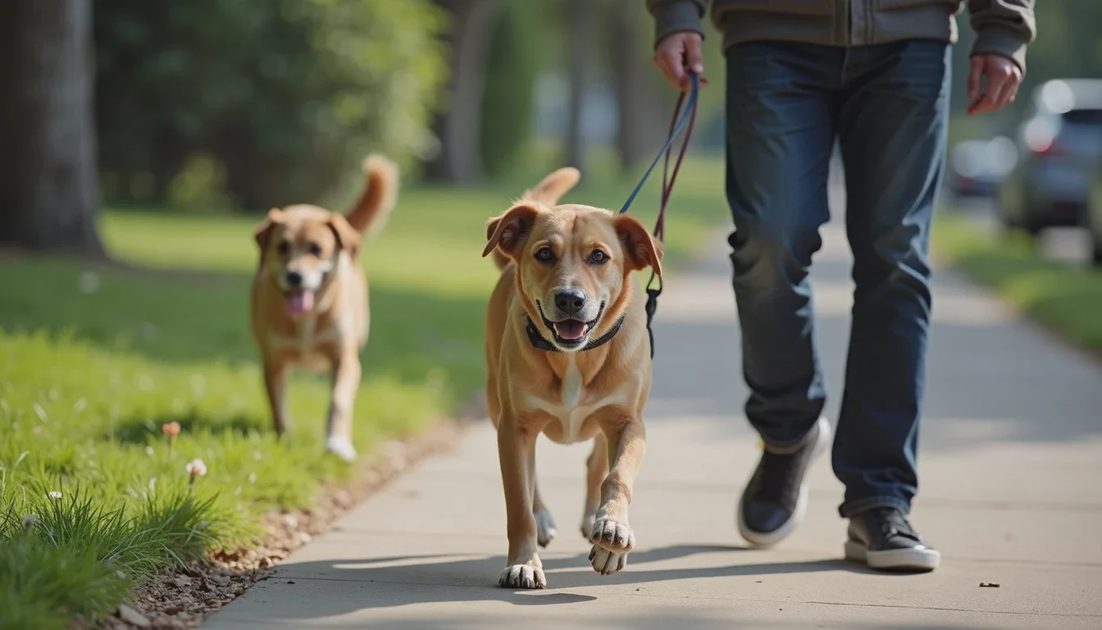
Few things escalate a walk faster than your dog spotting another dog.
The body goes still, then forward. The leash tightens. Breathing changes. And suddenly you are in a conversation with a dog who is no longer listening to anything else.
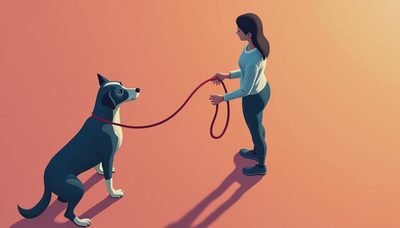
I spent a long time treating this as a “reactivity” problem that needed heavy management or corrections. What helped more was treating it as a predictable training situation that could be broken into smaller pieces. The goal is not to suppress the interest. The goal is to teach the dog a different way to handle the interest so both of you can keep walking without the leash turning into a tug-of-war.
What Is Usually Happening
When a dog pulls hard toward another dog, several things may be true at once:
The other dog is highly interesting (play, social curiosity, or concern)
The dog has practiced lunging or pulling in the past and it sometimes worked
The current distance is too close for the dog to think clearly
The dog does not yet have a strong alternative behavior in that context
Labeling it “dominance,” “stubbornness,” or “bad manners” rarely gives you a useful next step. Looking at distance, history, and available skills does.
Most dogs are not choosing to make the walk difficult. They are responding to a strong motivator in the environment with the tools they currently have. Our job is to give them better tools and to work at a distance where those tools can still be used.
The Core Strategy
Work at a distance where the dog can still respond, teach an alternative behavior that pays better than pulling, and only decrease distance when the dog is successful.
This approach is slower than hoping the dog will simply “get over it.” It produces more reliable change because it respects the dog’s current threshold instead of repeatedly pushing past it.
Practical Steps You Can Use on Walks
1. Notice the early body language
Most dogs give signals before the full pull: sudden stillness, hard stare, closed mouth, weight shifting forward, or a brief freeze. The earlier you see it, the more options you have. Waiting until the dog is already lunging leaves you with fewer good choices.
2. Create distance before it escalates
Cross the street, step behind a car, change direction, or increase the gap while the dog can still hear you. This is management, and management protects the training. Every time the dog rehearses a full pull or lunge, that pattern gets a little stronger. Preventing the rehearsal is not avoidance—it is smart training.
3. Mark and reward orientation to you
At a workable distance, any time the dog glances at you, turns toward you, or chooses to move with you, mark and pay with something high value. You are building the habit of checking in when other dogs appear. Early on, even a brief look is worth reinforcing heavily.
4. Teach a simple alternative behavior
Useful options include:
“Look at me”
“With me” (move together in a new direction)
“Find it” (food scattered on the ground to break the stare and reset)
These behaviors need to be taught first in easy environments so they are available when you need them on the walk. A cue the dog only knows in the living room will not reliably appear under the pressure of another dog.
5. End the interaction while it is still successful
Leave before the dog goes over threshold. Success at a greater distance is more valuable than failure at a closer one. Ending well protects the dog’s confidence and keeps the session from sliding into frustration.
What Does Not Help Much
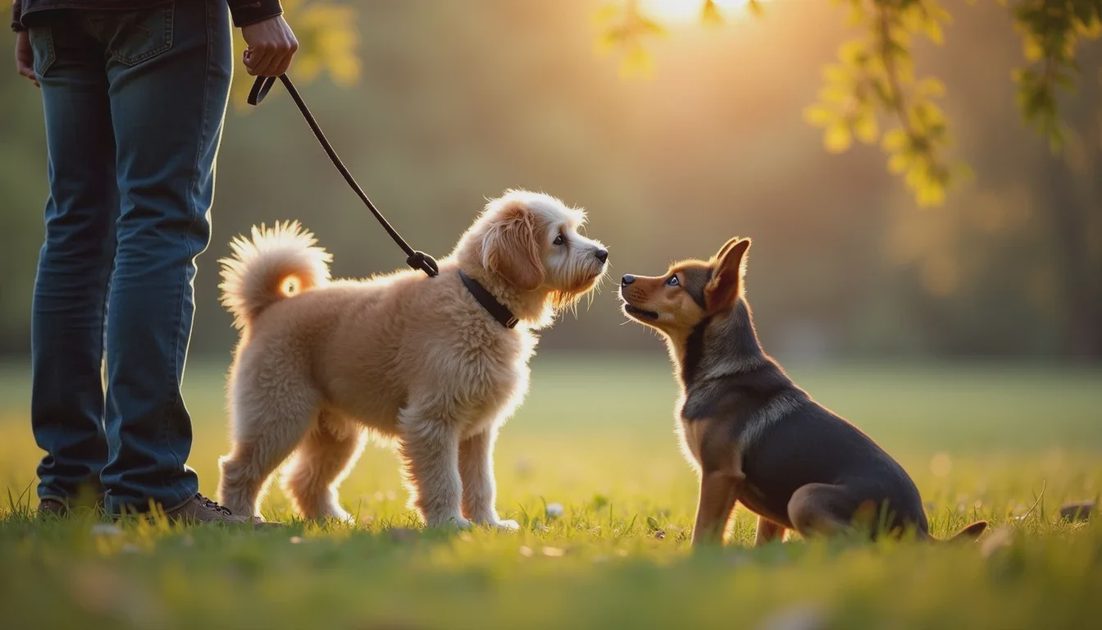
Certain common responses tend to make the pattern stronger or add unnecessary conflict:
Repeatedly saying the dog’s name while they are already locked on
Allowing the dog to drag you closer “just to say hi”
Punishing the pull after the dog is already over threshold
Expecting the dog to generalize from one quiet training session to every sidewalk encounter
Using the same low-value treats that work at home
These approaches usually add frustration without teaching a clearer choice. The dog is not refusing to listen out of spite. The current setup is simply too difficult for the skills the dog currently has.
A Note on Friendly vs. Concerned Pulling
Some dogs pull because they want to greet. Others pull because they are worried and want to increase distance or control the situation. The training structure is similar (distance, alternative behavior, reinforcement), but the emotional need underneath is different.
If your dog’s body language looks tight, hard, or conflicted—closed mouth, stiff body, hard stare, or inability to take food—give extra space and consider working with a qualified professional. What looks like “I want to say hi” can sometimes be “I am uncomfortable and do not know what else to do.”
Building the Skill Over Time
Start in low-distraction settings where other dogs appear at a comfortable distance. Reward heavily for calm choices. Only reduce distance when the dog can reliably check in or move with you.
Progress is measured by the dog’s ability to stay under threshold and offer the alternative behavior, not by how close you can get on any single day. Some days the available distance will be greater than others. That is normal. The pattern you are building is “other dog appears → I look at my person or move with my person → good things happen.”
A Simple Way to Practice This Week
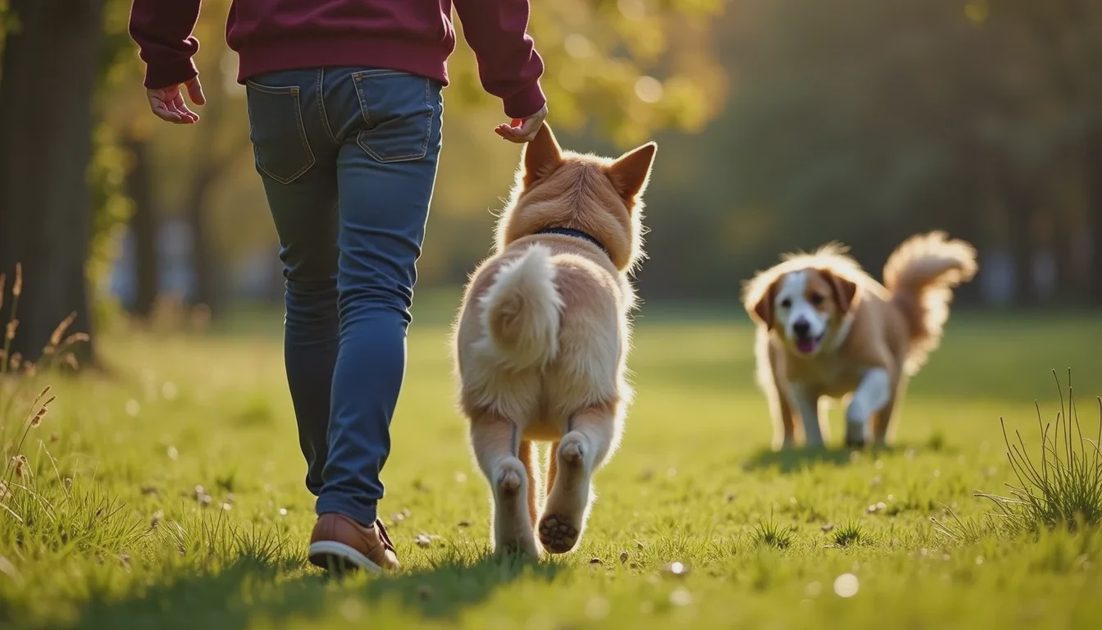
Choose a quieter walking time or route if possible.
Watch for the earliest signs that your dog has noticed another dog.
Increase distance before the leash goes tight.
Mark and reward any orientation toward you.
Leave while the dog is still successful.
Even a few clean repetitions at a comfortable distance begin to change the emotional picture and the behavioral pattern.
Final Thought
A dog who pulls toward other dogs is giving you clear information about what matters to them in that moment. Your job is not to suppress the interest. It is to teach a different way to handle the interest so both of you can keep walking without the leash turning into a battle.
Distance, timing, and a reinforced alternative will take you further than force ever did for me. Train the dog in front of you—at a distance where that dog can still learn.


Letters
No letters yet — be the first to write.