
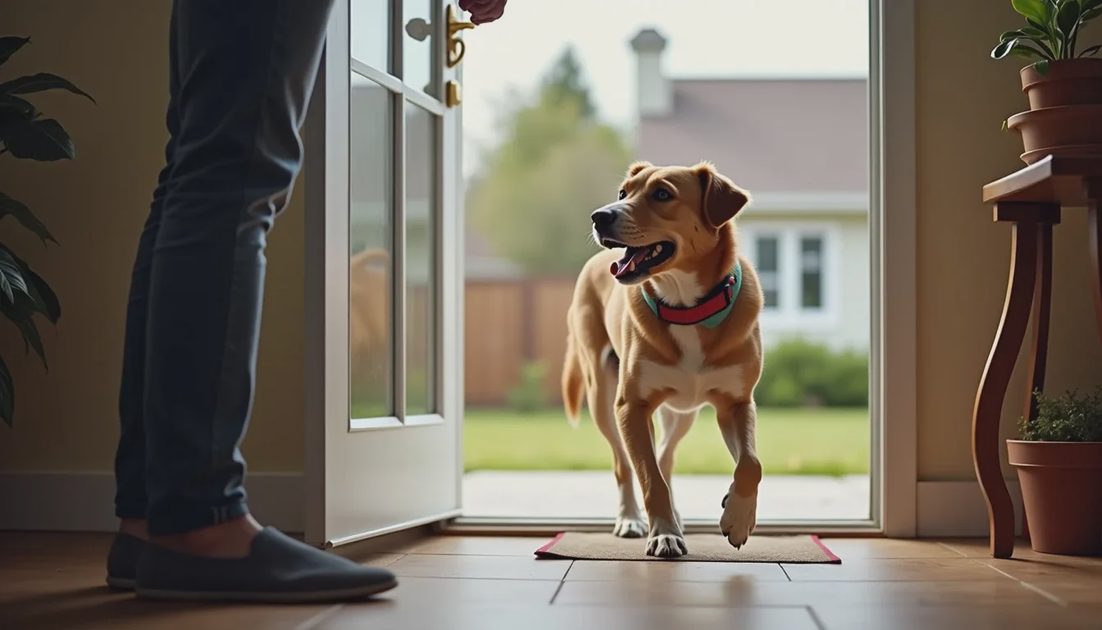
The doorbell rings and the dog arrives at the door at full speed.
Most of us have reached for the collar in that moment. It feels like the only way to keep the dog from jumping, bolting out, or turning the entryway into chaos. The problem is that grabbing the collar often becomes part of the excitement pattern, and it does not teach the dog what to do instead.
There is a calmer way to prepare for guests that relies on a taught behavior rather than physical management at the peak of arousal.
Why Collar Grabs Become a Habit
When the dog is already rehearsing door-rushing and jumping, the collar grab is a fast management tool. It prevents the worst outcomes in the moment. Over time, though, several things tend to happen:
The dog learns that the doorbell predicts a physical scramble
The collar itself can become a cue for more excitement or friction
The dog never practices an alternative behavior while guests are arriving
The handler remains stuck in a reactive pattern instead of a proactive one
Management is useful. It is just not the same as teaching. Relying on it indefinitely means the underlying pattern never changes.
The Core Alternative: A Practiced “Go to Place” for Arrivals
The most reliable replacement I have found is a settle or “place” behavior that is specifically practiced in the context of door arrivals. The dog learns: doorbell or knock → go to mat → stay there while the person enters → receive rewards for staying.
This does not eliminate excitement overnight. It gives the excitement a job that is incompatible with jumping on guests. The dog still feels the surge, but now has a clear, reinforced action to perform instead of rushing the door.
How to Build It Before You Need It
Step 1: Teach a solid place/settle behavior away from the door
The dog should already understand going to the mat and staying there for short durations with mild household movement. If this foundation is weak, adding the excitement of a real arrival will simply overwhelm the behavior.
Step 2: Add the doorbell as a cue to go to the mat
Start with a recorded doorbell or a light knock at very low intensity. Mark and reward the dog for moving toward the mat after the sound. Build up gradually so the sound begins to predict the mat rather than a door rush.
Step 3: Practice the full sequence with helpers
Have a familiar person ring the bell or knock, enter quietly, and ignore the dog while you reward the dog for staying on the mat. Keep early sessions short and successful. The goal is clean repetitions, not testing under maximum difficulty.
Step 4: Add real-life variability slowly
Different people, different times of day, slightly longer duration, the person walking further into the house. Only increase difficulty when the dog is succeeding at the current level. Jumping ahead too quickly is one of the fastest ways to lose the progress you have made.
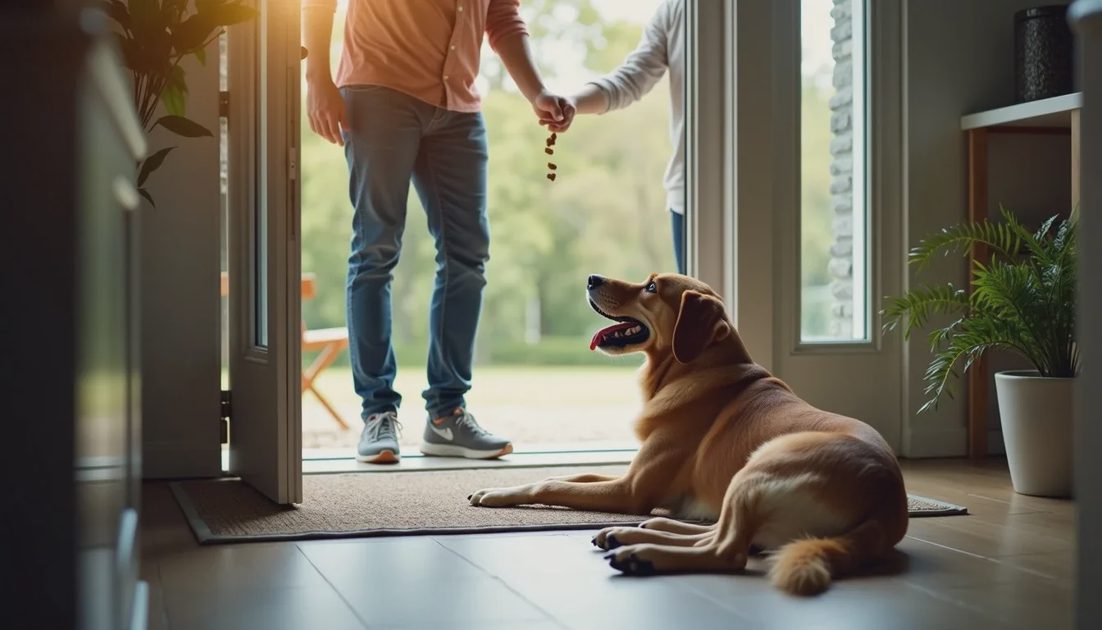
What to Do When Guests Arrive Before the Behavior Is Ready
Until the trained response is reliable, use management:
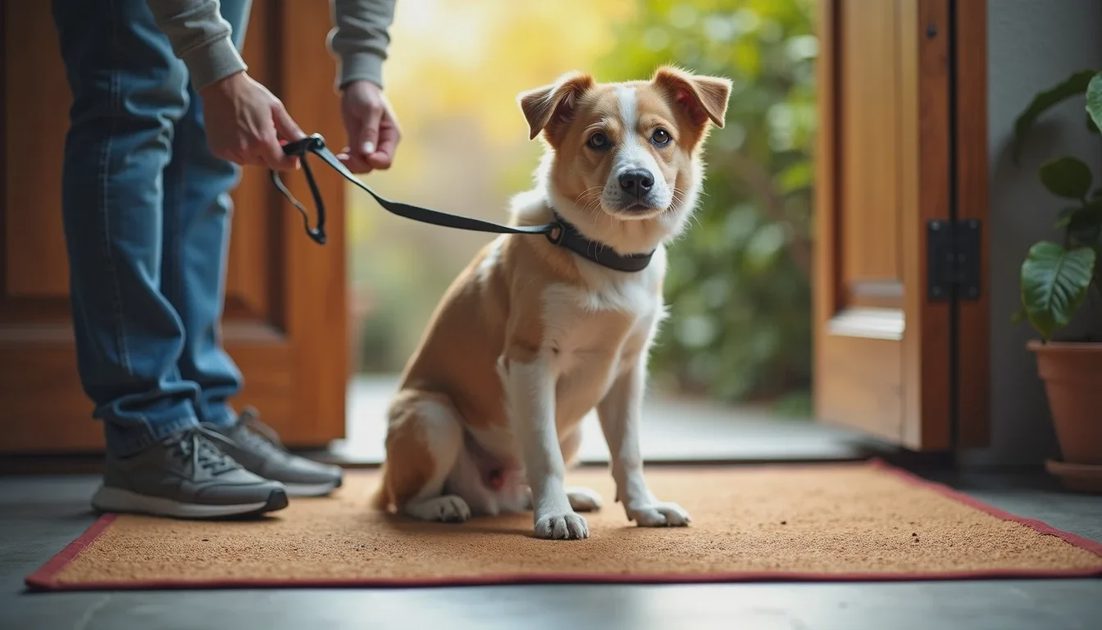
Leash the dog before opening the door
Use a baby gate or close a door to create space
Ask the guest to wait a moment while you set the dog up for success
If needed, put the dog in another room with something to do while people settle
There is no shame in management. It prevents rehearsal of the unwanted behavior while you build the new skill. Trying to force the unfinished behavior in real arrivals usually creates frustration and weakens what you have already taught.
Common Pitfalls to Avoid
Waiting until the dog is already at the door at full intensity to ask for the mat
Expecting the dog to stay while you have a long conversation at the open door too early in training
Letting guests reward jumping “just this once”
Skipping the foundation work and only practicing when real guests arrive
Using the same low-value rewards that work in quiet practice when the real arrival is far more exciting
Real guests are for testing and proofing, not for the first stages of teaching. The early work needs to happen in controlled conditions so the dog can succeed.
How This Changed Our Entryway
Once Pepper had a practiced mat behavior for arrivals, the doorbell stopped being an automatic scramble. She still gets excited—that is normal. But she has a clear job, and I have a clear plan that does not involve grabbing her collar at the peak of arousal.
Guests also feel more comfortable when the dog has a defined place instead of being physically restrained in a flurry of movement. The whole arrival sequence became quieter and more predictable for everyone involved.
Final Thought
Preparing a dog for guests is less about suppressing excitement and more about giving the excitement a place to go. When the dog knows where to be and what pays, the entryway becomes manageable instead of chaotic.
You do not have to grab the collar forever. You can teach an alternative and then practice it until it becomes the new pattern. Progress has four paws and a messy middle. The messy middle includes a lot of arrivals that still require management while the new behavior is taking root. That is normal. Keep the foundation strong, the sessions short, and the reinforcement clear.

Letters
No letters yet — be the first to write.