
A dog crate / puppy crate can be a useful resting place, travel tool, and short-term management option, but it is not a magic box for fixing behavior. The goal is not to make your dog tolerate confinement through sheer exhaustion. The goal is to help the crate predict safety, quiet time, and good things. That process can take a few days for one dog and several weeks for another. Train the dog in front of you, not the perfectly relaxed puppy in a video.
What a crate is actually for
A properly introduced crate gives a dog a small, predictable space where nobody expects play, greeting, or constant movement. Puppies often need help settling because the whole house is interesting. An adult dog might appreciate a quiet nap area while repair workers, visiting children, or a vacuum cleaner move through the room. A crate can also support safe car travel when secured appropriately, although the setup should match your vehicle and the crate manufacturer’s directions.
A crate is not a substitute for exercise, companionship, bathroom breaks, or training. It should never be used as punishment after a destroyed shoe or an accident on the rug. If your dog races away, pants heavily, drools, claws at the door, or repeatedly tries to escape, those are important signals. Reduce the difficulty and consider help from a qualified reward-based trainer, especially if panic is involved.
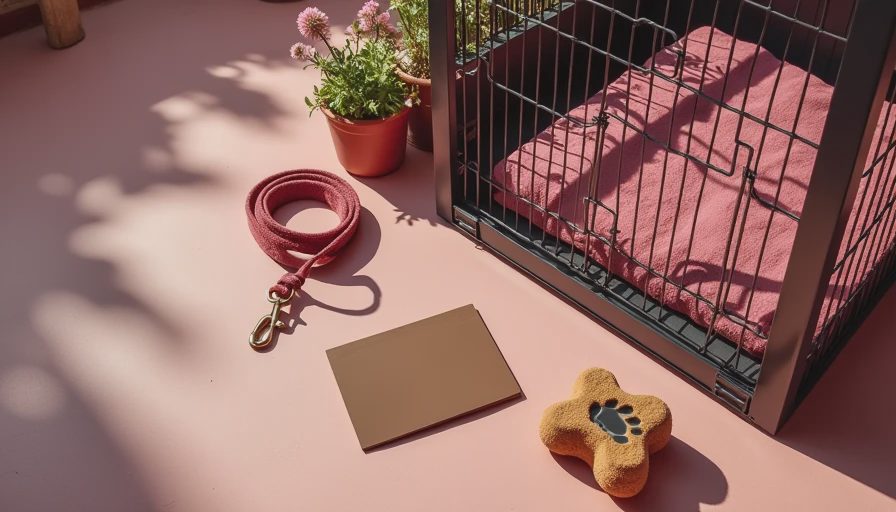
For many homes, a wire crate with a washable mat works well because it offers ventilation and can be adjusted with a divider as a puppy grows. Plastic travel kennels provide more visual blocking and can feel den-like. Soft-sided models are convenient for calm adult dogs but are easy for determined chewers to damage. The best choice is the one your dog can use safely, not the prettiest option in the store.
Choosing the right size and location
The crate should allow your dog to stand up without crouching, turn around comfortably, and lie down in a natural position. Extra space is not always helpful during house training because a puppy may sleep at one end and use the other as a bathroom. A divider lets you buy an adult-size crate without giving a small puppy a whole studio apartment on day one.
Measure from your dog’s nose to the base of the tail, then add a few inches. Measure standing height from the floor to the top of the head or ears, depending on how your dog naturally carries them. Breed labels are only rough clues. A tall, narrow dog and a compact, broad dog may need very different dimensions even at the same weight.
Location matters just as much. Put the dog crate / puppy crate near normal household activity during the day, but not in the center of a busy walkway. A corner of the living room often works better than an isolated laundry room. At night, placing a puppy’s crate near your bed can make bathroom trips easier and helps you notice restless movement before an accident. Later, you can move it gradually if that is your plan.
Introducing the crate without a showdown
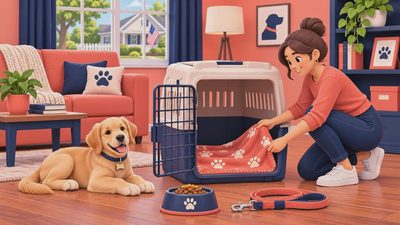
Start with the door secured open. Toss a treat just inside, let your dog retrieve it, and allow the dog to come back out immediately. Repeat several times without closing the door. Feed part of a meal near the entrance, then just inside, and eventually toward the back as comfort improves. If your dog stops eating or will not enter, the step is too difficult. That was information, not failure.
Next, reward brief voluntary stays. Your dog steps in, you say a calm marker such as “yes,” and deliver a treat while the dog remains inside. Close the door for one second, feed through the bars, and open it before worry builds. Gradually try five seconds, ten seconds, and then a minute while you sit nearby. Do not jump from one successful minute to leaving for an hour to run errands.
A stuffed food toy, a safe chew, or a portion of dinner can make the space worthwhile. Choose items your dog handles safely and supervise new chews. Keep your voice boring and friendly. Big emotional exits and reunions can make confinement feel like a dramatic event, while quiet repetition teaches that people leaving and returning are ordinary parts of the day.
A realistic daily routine
The dog crate / puppy crate works best when it appears in a predictable rhythm. A young puppy might go outside after waking, eat, play briefly, practice two minutes of training, and then rest. The exact schedule depends on age, health, activity, and bathroom history. Young puppies generally need frequent breaks, and no crate can compensate for waiting too long.
Try one short crate session after your dog has had a bathroom opportunity and some gentle activity. Stay nearby at first. While the dog rests, wash a few dishes or answer email rather than hovering. If the dog wakes and fusses after a reasonable interval, take the fuss seriously enough to assess the need: bathroom, fear, discomfort, or simply frustration? For a puppy, quietly offering a bathroom trip can prevent a problem. Keep the trip uneventful and return to the routine.
The crate should not contain a dog for most of the day and then become the only place where calm behavior is expected. Practice settling on a mat beside you, relaxing behind a baby gate, and resting while household sounds happen. Variety builds a more flexible dog.

Common mistakes that make crating harder
The first mistake is moving too fast. A dog that stayed calmly for ten minutes while you sat nearby has not necessarily learned to handle ten minutes alone. Change one variable at a time: distance, duration, door position, or household noise. If the dog struggles, return to the last easy version for a few repetitions.
Another mistake is using the crate only when something unpleasant happens. If the crate appears only before a bath, a long absence, or a stressful car ride, your dog will notice the pattern. Offer meals, treats, naps, and calm hangouts there too. Avoid pushing or dragging a reluctant dog inside, because physical force can turn hesitation into a bigger conflict.
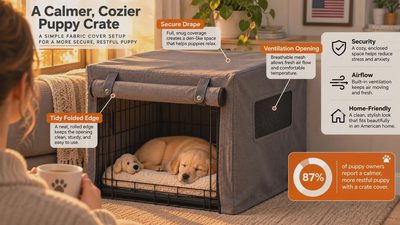
Do not cover every crate automatically. Some dogs relax with partial visual blocking, while others become hotter or more anxious. Maintain airflow and watch your dog’s response. Also inspect the setup for loose blankets, collar hazards, sharp wire edges, and anything that could be swallowed. Safety is part of training, not an afterthought.
When to change the plan
A dog who whines for thirty seconds because a treat ended is different from a dog in genuine distress. Look for escalating vocalizing, frantic movement, heavy panting unrelated to heat, drooling, self-injury, or repeated escape attempts. Punishing those signs will not teach relaxation. Shorten sessions, remove pressure, and ask your veterinarian or a certified behavior professional for guidance when anxiety is persistent.
If your dog dislikes the dog crate / puppy crate but happily rests behind a gate or on a bed, use that information. A crate is a tool, not a moral test. Some families need a secure room, exercise pen, or gated area instead. You can revisit the crate later with smaller steps and better reinforcement.
Before buying another product, try one small action today: feed one meal beside the open crate, toss five treats inside, and stop while your dog is still comfortable. Tomorrow, repeat it with no demand for the door to close. Progress has four paws and a messy middle, but steady practice can turn a once-ignored space into a genuinely useful part of home life.

Letters
No letters yet — be the first to write.